

T-Shirt Wall Display Case Buying Guide for Retailers
- Understanding Merchandising Goals and Customer Intent
- Why a t shirt wall display case matters
- Customer and in-store behavior
- Key performance indicators (KPIs) to set
- Design and Specification Considerations
- Size, capacity, and sightlines
- Materials, finishes, and brand fit
- Lighting, signage, and color temperature
- Functionality: Security, Modularity, and Accessibility
- Security features and loss prevention
- Modularity and future-proofing
- Accessibility and safety compliance
- Costs, Return on Investment, and Installation
- Cost factors and budgeting
- Estimating ROI
- Installation and maintenance
- Materials & Mounting Comparison
- Selection Checklist and Implementation Roadmap
- Practical checklist before purchase
- Implementation timeline (typical)
- Measurement and iteration
- Why Choose Customized Solutions — Introducing RUMIS
- RUMIS customized solutions for fashion retail
- What RUMIS offers and competitive advantages
- How I recommend working with a vendor like RUMIS
- FAQ — Common Questions from Retailers
- 1. How deep should shelving be in a t shirt wall display case?
- 2. Are glass-front display cases worth the cost?
- 3. What lighting should I use for t-shirt displays?
- 4. How do I measure the effectiveness of a new display case?
- 5. What are typical lead times for customized t shirt wall display cases?
- 6. How do I ensure fixtures meet safety and compliance standards?
- 7. Can a t shirt wall display case support omnichannel retail?
As a retail display consultant with years of hands-on experience in apparel stores and a deep focus on merchandising effectiveness, I know that the right t shirt wall display case transforms a plain wall into a sales engine. This guide is written to help retailers—whether independent boutiques or multi-store chains—select, specify, and deploy t shirt wall display cases that increase sell-through, protect inventory, and support brand identity. The content below addresses practical selection criteria, installation and safety standards, cost/benefit comparisons, and measurement strategies, and it references authoritative sources to validate best practices.
Understanding Merchandising Goals and Customer Intent
Why a t shirt wall display case matters
Before selecting any display fixture, define what you want it to accomplish. A t shirt wall display case can be a focal merchandising unit, an anti-theft showcase, or a temperature-controlled High Quality presentation for high-value items. I always start by asking: Do we want visibility at a glance, or curated and protected presentation? The answer drives material, front treatment (glass, acrylic, open-front), and locking mechanisms.
Customer and in-store behavior
Shoppers looking for a specific graphic tee expect quick product discovery and clear sizing information. According to retail research, fast visual recognition and easy access increase conversion rates in apparel departments (Visual merchandising — Wikipedia). For impulse or gift purchases, a wall display case with effective lighting and curated pairings (e.g., tee + hat) can increase average transaction value.
Key performance indicators (KPIs) to set
Set measurable KPIs before you buy. Typical metrics I track include sell-through rate (% sold of units displayed per week), conversion lift (comparison of categories with vs. without wall cases), and shrink reduction (theft / inventory loss). These KPIs let you assess ROI and justify fixture investments.
Design and Specification Considerations
Size, capacity, and sightlines
Measure available wall space and customer sightlines. Wall display cases for t-shirts vary from narrow single-column cabinet units (0.4–0.6 m wide) to full-wall installations (3–6 m). Recommended heights: place the primary product zone between 100–160 cm from finished floor to align with average eye level. For visibility of folded tees, include shallow shelving (15–25 cm deep) to avoid blocked sightlines.
Materials, finishes, and brand fit
Common materials include powder-coated steel, anodized aluminum, tempered glass, and acrylic. Each affects cost, durability, and aesthetics. Powder-coated steel is durable for high-traffic stores; glass and acrylic give a High Quality look. I prefer tempered glass fronts for High Quality t-shirts because they combine protection and high clarity. Consult material safety and testing standards from ASTM International for load and glass safety benchmarks.
Lighting, signage, and color temperature
LED accent lighting is essential. Use 2700K–3500K LEDs for warm retail apparel spaces or 3500K–4500K for crisp, modern aesthetics. Ensure proper lumen levels: 200–500 lux for folded apparel displays, and 500–1000 lux for highlighted High Quality tees. Lighting both illuminates product details and influences perceived quality.
Functionality: Security, Modularity, and Accessibility
Security features and loss prevention
If shrink is a concern, choose lockable display cases or integrate an alarm system. Glass-front cabinets with lock options reduce casual theft while allowing visibility. For high-theft environments, pair cases with electronic article surveillance (EAS) or RFID tags for integrated inventory control. The National Retail Federation provides resources on loss prevention strategies in apparel retail.
Modularity and future-proofing
Retail fixtures should adapt to seasonal changes. I recommend modular systems that allow reconfiguration from single-slot tee displays to mixed apparel walls (hoodies, accessories). Modular wall systems reduce long-term capital outlay and support omnichannel retail strategies.
Accessibility and safety compliance
Make sure your display complies with accessibility guidelines and workplace safety. Keep aisles clear, and mount heavier items lower for safe retrieval. For guidance on workplace safety during installation and fixture loading, consult OSHA retail guidance.
Costs, Return on Investment, and Installation
Cost factors and budgeting
Typical cost drivers include material, finish, lighting, security hardware, and installation complexity. Custom-fabricated full-wall cases will cost more than off-the-shelf modular panels. I recommend budgeting not only for the fixture but for lighting, installation labor, and any permitted electrical work.
Estimating ROI
Calculate expected ROI using projected conversion lift and average order value (AOV). Example: if a t shirt wall display case drives a 10% lift in category sales and the category's monthly sales are $20,000, the incremental monthly revenue is $2,000. If the fixture (including lighting and installation) costs $3,500, payback occurs in under two months. Track actual KPIs post-install to validate assumptions.
Installation and maintenance
Hiring experienced installers ensures level attachment, proper anchoring, and safe electrical work. Schedule periodic maintenance: clean glass monthly, test locks and lighting quarterly, and inspect mounting hardware annually. Good maintenance preserves brand presentation and reduces safety risks.
Materials & Mounting Comparison
| Option | Typical Cost | Strengths | Weaknesses |
|---|---|---|---|
| Powder-coated steel frame + tempered glass front | $$$ | Durable, High Quality look, secure | Heavier; higher installation cost |
| Anodized aluminum + acrylic front | $$ | Lightweight, modern finish, cost-effective | Acrylic scratches easier than glass |
| Wood veneer shelves + open-front | $–$$ | Warm brand feel; easy access | Less secure; higher maintenance |
Sources: Material properties and retail fixture norms referenced from Retailing — Wikipedia and industry best practices by NRF.
Selection Checklist and Implementation Roadmap
Practical checklist before purchase
- Define merchandising objective: display, security, or High Quality presentation.
- Measure wall, aisle clearance, and customer sightlines.
- Select materials aligned with brand and expected foot traffic.
- Decide on lighting, signage, and measurement (sensors, RFID, sales tracking).
- Get installation quotes and confirm anchoring type (concrete, stud, or drywall).
- Plan maintenance schedule and spare parts (locks, shelves, LEDs).
Implementation timeline (typical)
From decision to live merchandising, a typical timeline looks like this:
- Week 1–2: Specification and vendor selection
- Week 2–4: Manufacturing/lead time for customized solutions
- Week 4–5: Delivery and professional installation
- Week 6: Merchandising, signage, and KPI baseline measurement
Measurement and iteration
Collect sales and inventory data for 4–8 weeks to measure the impact. If sell-through is below expectations, iterate by adjusting product placement, lighting intensity, or signage. Use A/B testing across stores if you operate multiple locations to isolate fixture impact.
Why Choose Customized Solutions — Introducing RUMIS
RUMIS customized solutions for fashion retail
In my experience, off-the-shelf fixtures can be a quick fix, but long-term brand impact often requires bespoke solutions. RUMIS has been a leading fashion retailer solutions manufacturer for over 10 years. They provide customized display rack solutions for fashion retail stores and clothing stores, covering both small boutiques and large chains. Their systems emphasize modularity, brand customization, and production quality.
What RUMIS offers and competitive advantages
RUMIS offers tailored display racks that include wall display cases for t-shirts, modular back-wall systems, and free-standing fixtures. Key differentiators I’ve observed include:
- Customization: full brand personalization in finishes, signage, and configuration.
- Manufacturing breadth: capable of small-batch bespoke runs and large-volume roll-outs.
- International reach: systems delivered to more than 60 countries, with recognized market acceptance.
For specifics, you can view their product catalog and contact them at rumisinterior.com or via email at info@rumisinteriors.com.
How I recommend working with a vendor like RUMIS
- Start with a pilot: order a small number of customized t shirt wall display cases to test merchandising impact in 1–2 stores.
- Validate KPIs: measure sell-through, AOV, and shrink for the pilot stores for 8 weeks.
- Refine design: adjust shelving depth, lighting, and branding elements based on pilot learnings.
- Scale with confidence: roll out across selected regions or nationally.
FAQ — Common Questions from Retailers
1. How deep should shelving be in a t shirt wall display case?
For folded tees, 15–25 cm (6–10 in) depth is typically sufficient. This keeps items visible while avoiding overcrowding. For rolled or rolled-and-stacked displays, slightly deeper shelves (25–30 cm) may be useful.
2. Are glass-front display cases worth the cost?
Yes, if your objective includes security and High Quality presentation. Tempered glass offers protection and high product visibility. If budget is a constraint, acrylic fronts provide a similar look at lower cost but scratch more easily.
3. What lighting should I use for t-shirt displays?
LED strip lighting with 2700K–4500K color temperature is recommended depending on store ambiance. Aim for 200–500 lux for folded apparel and 500–1000 lux for highlighted products.
4. How do I measure the effectiveness of a new display case?
Track sell-through rate, conversion lift for the category, average order value, and shrink reduction. Use POS and inventory systems to capture before/after comparisons. Run A/B tests across stores where possible.
5. What are typical lead times for customized t shirt wall display cases?
Lead times vary by complexity: 2–6 weeks for modular items, and 4–12+ weeks for fully bespoke systems. Plan for additional time if international shipping or installation permits are required.
6. How do I ensure fixtures meet safety and compliance standards?
Work with vendors who test materials to industry standards (e.g., ASTM). Ensure professional installation and periodic inspections, and consult local building codes for wall anchoring and electrical installations.
7. Can a t shirt wall display case support omnichannel retail?
Yes. Integrate RFID or barcode scanning in the display to sync inventory with e-commerce systems. Use the display for in-store pickup or ship-from-store fulfillment by keeping a single inventory record and training staff on quick retrieval protocols.
If you’d like tailored advice for your store layout or a quote for customized display racks, contact RUMIS. Their team can provide product samples, CAD drawings, and workflow recommendations to ensure a seamless installation: https://www.rumisinterior.com/ or email info@rumisinteriors.com.
With the right selection and implementation, a t shirt wall display case becomes more than storage—it becomes a strategic merchandising tool that protects inventory and elevates brand perception. I recommend starting with a clear merchandising objective, testing with a pilot, and then scaling with a reliable manufacturer like RUMIS to ensure design consistency and performance across locations.
How to Choose a Clothing Store Wall Display Manufacturer in United States — Guide by RUMIS
Custom wall mount shoe display Manufacturers and Suppliers in us
Choosing materials: metal vs wood wall-mounted clothing racks
Top boutique slatwall display Manufacturers and Suppliers in us
FAQ
Are your retail clothes display racks available in stock or made to order?
Our retail clothing store displays are available in standard inventory, with many products made to order for custom requirements.
Can your clothing shelves display wall rack be used for pop-up shops?
Absolutely. Our display racks are designed for flexibility and can be easily reconfigured to adapt to new layouts and displays.
Do you provide customized garment display rack for clothes ervices?
Yes, we provide customized garment display racks for clothes services where we can tailor product designs, dimensions, and colors according to your requirements.
Can you provide design mock-ups or prototypes before retail clothing store displays production?
Absolutely! We offer design mock-ups and prototypes to ensure that our clients are satisfied with the final retail clothing store displays product before proceeding with production.
Do you provide shipping and delivery services for a frame display stands?
Yes, we offer reliable shipping and delivery services for fashion clothing rack displays, working with trusted logistics partners to guarantee prompt delivery.
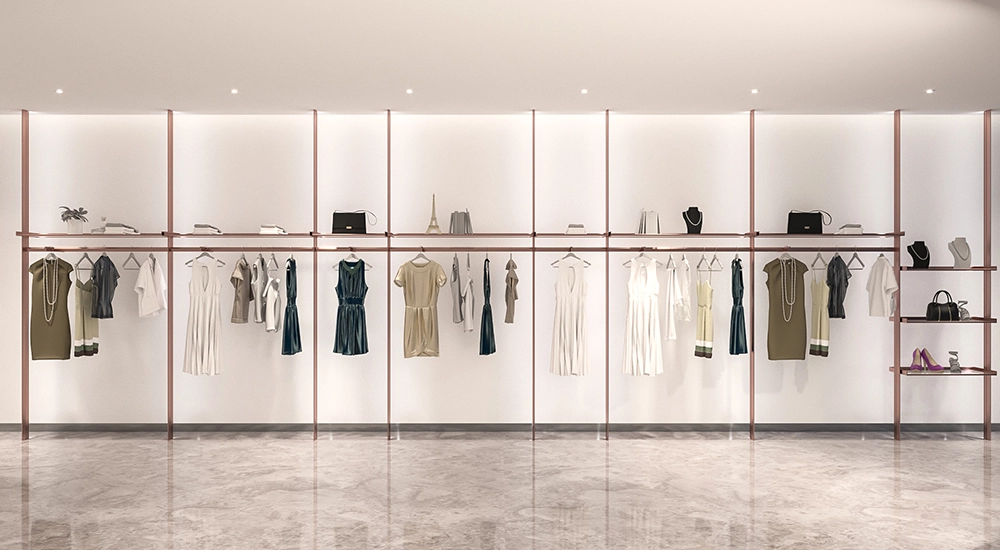
TINT
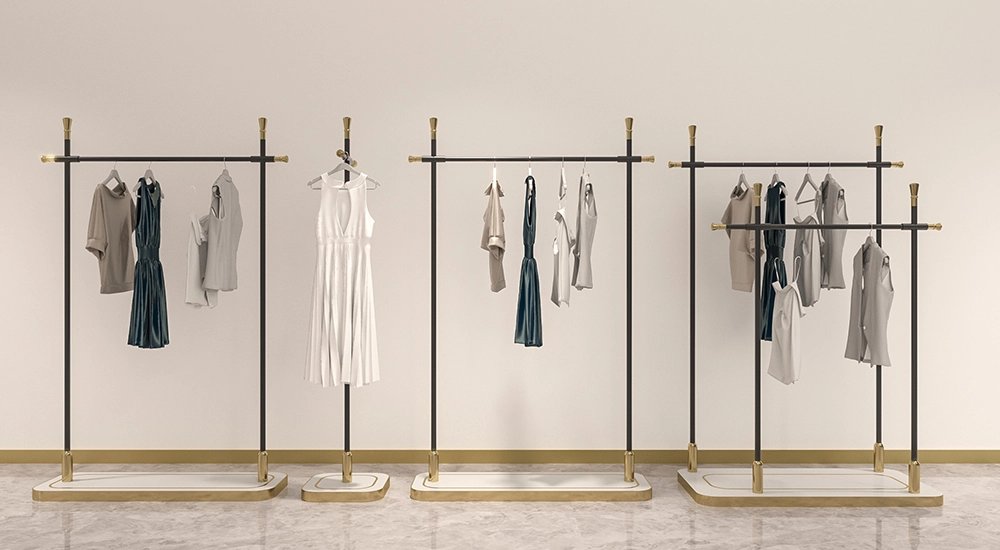
RYLOR
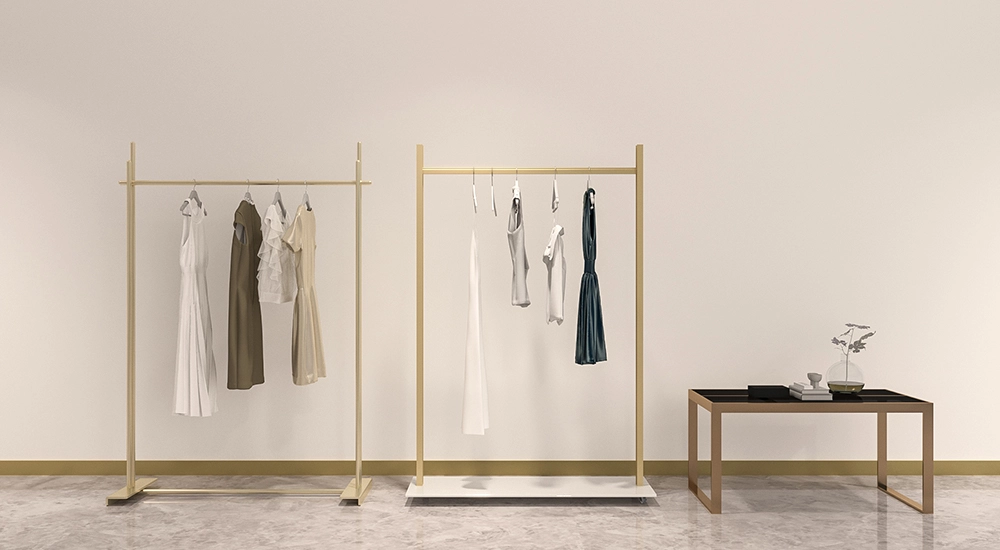
FLEEK
Elegant gold free-standing custom clothing display rack set with multi-function display table
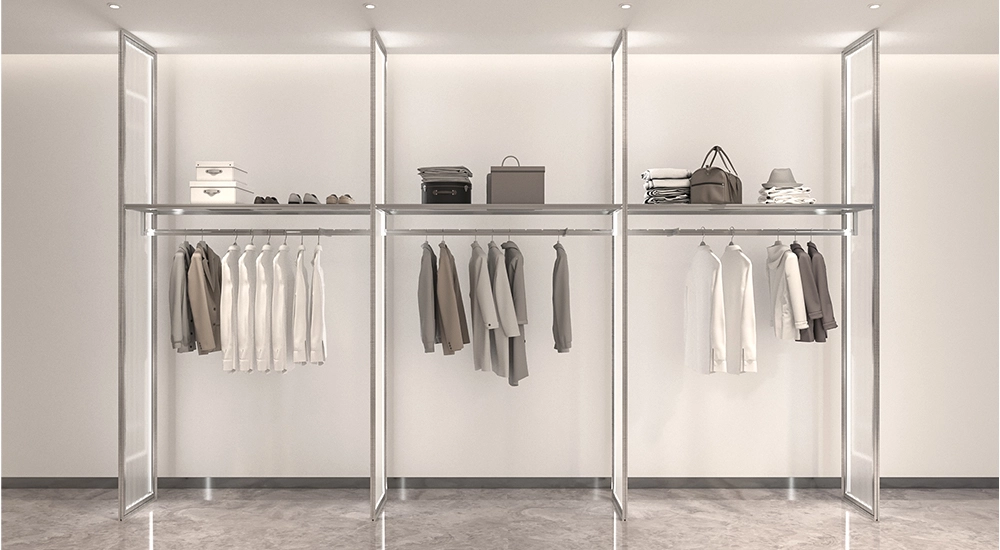
VISO
Copyright © 2024 RUMIS All Rights Reserved. Designed by Gooeyun

Facebook
LinkedIn
Instagram