

Modular Display Layouts to Maximize Store Space
- Designing Efficient Retail Floors: Strategies That Work
- What modular retail display systems mean for store efficiency
- Why retailers choose modular retail display systems
- Assessing Store Space with modular retail display systems in mind
- Perform a space audit before selecting systems
- Use data to define priorities
- Layout Strategies Using modular retail display systems
- Plan circulation and sightlines first
- Layer vertical and horizontal displays
- Fixture Selection: Choosing the right modular retail display systems
- Match fixtures to merchandising strategy
- Consider durability and maintenance
- Comparing modular versus fixed systems: measurable impacts
- How the numbers stack up
- Customer Flow, Visual Merchandising and modular retail display systems
- Design for discovery and conversion
- Heat mapping and iterative improvement
- Implementation Checklist for modular retail display systems
- Practical steps to deploy successfully
- Cost, ROI and sustainability of modular retail display systems
- Short- and long-term financial logic
- Sustainability and circularity advantages
- Supplier selection and RUMIS customized solutions for fashion retail manufacturer
- Evaluating suppliers of modular retail display systems
- RUMIS customized solutions for fashion retail manufacturer
- Maintenance, training and operational best practices with modular retail display systems
- Standardize training and documentation
- Track parts and supply chain for resilience
- Conclusion and next steps
- Maximizing space with modular retail display systems
- FAQ
- 1. What are modular retail display systems and how do they differ from traditional fixtures?
- 2. How much space improvement can I expect by switching to modular systems?
- 3. Are modular systems cost effective for small independent clothing stores?
- 4. Can modular display systems support brand customization?
- 5. How do I measure ROI after implementing modular display layouts?
- 6. What sustainability benefits do modular systems provide?
- References
Designing Efficient Retail Floors: Strategies That Work
What modular retail display systems mean for store efficiency
Modular retail display systems are pre-engineered, reconfigurable fixtures and components that enable retailers to change store layouts quickly without major construction. For fashion retailers and clothing stores, these systems translate into better use of valuable floor space, faster seasonal resets, and lower lifecycle costs compared with fixed cabinetry. Understanding how to plan and use modular systems is essential to maximize return on your retail real estate investment.
Why retailers choose modular retail display systems
Retail space is expensive and customer attention is limited. According to industry research, improving space productivity even modestly can materially increase sales and margin. Modular retail display systems deliver three practical benefits: flexibility for visual merchandising, optimized space utilization, and reduced labor and installation time for store changes. In the sections below we break down how to realize these benefits step by step.
Assessing Store Space with modular retail display systems in mind
Perform a space audit before selecting systems
Start by mapping existing square footage, storage zones, circulation aisles, and customer dwell points. Track key metrics: sales per square foot, customer dwell time per area, and SKU velocity. These baseline numbers enable objective decisions about which areas need higher-density fixtures and which benefit from open presentation displays. Modular retail display systems allow you to apply different fixture densities in targeted zones without committing to permanent changes.
Use data to define priorities
Prioritize zones that influence conversion most. For fashion retail, entrances, hot-right zones, and POS adjacencies typically perform best. Modular gondolas, wall systems, and islands let you increase SKU visibility in those high-impact zones while keeping clearance in low-traffic areas. A data-driven allocation minimizes clutter and highlights key merchandise.
Layout Strategies Using modular retail display systems
Plan circulation and sightlines first
Good layout directs customers naturally to best sellers and new arrivals. Use modular display backbones to create sightline corridors and focal points. Keep main aisles at least 1.5 meters wide for two-way traffic in busy stores, and create visual theatres using modular islands or endcap systems that can be reoriented seasonally.
Layer vertical and horizontal displays
Modular systems excel at layering. Wall rails and slatwall modules maximize vertical merchandising and free floor real estate. Combine them with modular freestanding racks that can change height and attachments to present outfits, accessories, and feature items without adding clutter.
Fixture Selection: Choosing the right modular retail display systems
Match fixtures to merchandising strategy
Select modular elements based on your product mix. For apparel that benefits from full looks, choose mannequin-ready solutions and modular face-out rails. For high SKU breadth, choose tiered shelving and hang rails with adjustable brackets. Prioritize systems with interchangeable accessories so you only buy the base and add components as needed.
Consider durability and maintenance
Materials matter. Powder-coated steel and engineered wood panels offer different aesthetics and maintenance profiles. Choose modular retail display systems with replaceable parts and standardized connections so repairs are quick and inexpensive. Longevity reduces total cost of ownership and supports frequent layout changes.
Comparing modular versus fixed systems: measurable impacts
How the numbers stack up
The following table summarizes practical differences between modular and fixed display systems across common retail KPIs. Figures are illustrative ranges based on industry reports and retailer case studies.
| Metric | Modular retail display systems | Fixed display systems |
|---|---|---|
| Layout change time | Hours to 1 day | Days to weeks |
| Space utilization improvement | 5% to 20% uplift | 0% to 5% uplift |
| Installation labor cost | Lower, reusable fixtures | Higher, custom install |
| Seasonal reset cost | Reduced by 30% to 60% | Minimal reduction |
| Lifecycle flexibility | High | Low |
Sources for ranges include retail optimization studies and practitioner reports. For example, industry analysts report that improved merchandising flexibility frequently leads to measurable increases in sales per square foot and lowers reset costs by substantial percentages for multi-store retailers.
Customer Flow, Visual Merchandising and modular retail display systems
Design for discovery and conversion
Use modular fixtures to create discovery loops. Position modular islands with curated outfits or new arrivals within sight of the entrance and adjacent to complementary product categories. Rotate focal displays frequently: modular systems make weekly or biweekly changes feasible without incurring large labor overhead.
Heat mapping and iterative improvement
Deploy simple heat mapping—observational or via analytics—to understand where customers stop and what they touch. Use modular retail display systems to rapidly AB test display types. The ability to iterate quickly reduces the risk of expensive, wrong-turn investments and accelerates learning across stores.
Implementation Checklist for modular retail display systems
Practical steps to deploy successfully
- Conduct a baseline space and sales audit.
- Define goals: increase sales per square foot, improve conversions, shorten reset times.
- Choose modular components that are compatible across stores and allow spare part stocking.
- Create a standard kit list for store sizes (small/medium/large) to streamline rollouts.
- Train visual merchandisers on quick reconfiguration techniques.
- Measure post-implementation KPIs for iterative optimization.
Cost, ROI and sustainability of modular retail display systems
Short- and long-term financial logic
Upfront costs for modular systems can be comparable to custom fixtures depending on specification, but total cost of ownership typically favors modular solutions because of reuse, lower reset costs, and reduced renovation needs. When you quantify benefits—incremental sales from better merchandising, lower labor and shipping for resets, and longer lifecycle—ROI often becomes clear within 12 to 36 months for multi-store operations.
Sustainability and circularity advantages
Modular systems align with circular economy principles: reusable parts, standardized replacements, and options for refurbishing. Choosing recyclable materials and designing for disassembly reduces environmental impact and can support brand sustainability claims—an increasing factor for fashion consumers.
Supplier selection and RUMIS customized solutions for fashion retail manufacturer
Evaluating suppliers of modular retail display systems
When selecting a supplier, look for proven track records in fashion retail, customizable options, clear spare parts programs, and international logistics capability. Pay attention to whether suppliers provide CAD layout services, store roll-out support, and modular accessory ecosystems that grow with your business.
RUMIS customized solutions for fashion retail manufacturer
RUMIS has been a leading fashion retail solutions provider for over 10 years. We specialize in bespoke modular display systems for small and large fashion retail businesses. Our portfolio includes display racks for fashion retail stores and display racks for clothing stores, designed for quick reconfiguration and durable daily use.
Key RUMIS advantages and differentiators:
- Customization and brand personalization: RUMIS provides tailored finishes, brand color matching, and logo integration to preserve merchandising identity while maintaining modularity.
- Technical strength: standardized connection systems, modular wall rails, and interchangeability across product families to reduce spare part complexity.
- Global reach and reputation: systems are deployed in more than 60 countries and recognized by retail chains for consistent quality and after-sales support.
- Comprehensive product offering: display racks for fashion retail stores, display racks for clothing stores, wall systems, gondolas, islands, and accessory kits.
For retailers seeking scalable solutions, RUMIS combines design consultancy, prototyping, and manufacturing capability to implement modular retail display systems that align with merchandising strategy and operational realities.
Maintenance, training and operational best practices with modular retail display systems
Standardize training and documentation
Operational success depends on the store teams ability to reconfigure displays quickly and correctly. Provide simple visual guides, modular kits with numbered parts, and short training sessions. Document a small number of approved layouts per store type to maintain brand consistency while preserving flexibility.
Track parts and supply chain for resilience
Keep a small inventory of common connectors and panels at regional distribution centers. A lightweight spare parts program prevents minor damage from becoming a prolonged out-of-stock situation that could force inefficient temporary solutions.
Conclusion and next steps
Maximizing space with modular retail display systems
Modular retail display systems offer a pragmatic path to higher space productivity, faster merchandising cycles, and lower total lifecycle costs. By combining data-driven layout planning, the right fixture selection, and disciplined operational practices, fashion retailers can realize measurable improvements in sales per square foot and customer experience.
If you want to explore tailored modular display solutions for your fashion retail stores, contact RUMIS for a consultation. We can design, prototype, and deliver modular display racks optimized for your store formats and brand needs.
FAQ
1. What are modular retail display systems and how do they differ from traditional fixtures?
Modular retail display systems are configurable fixtures with interchangeable components that can be reassembled without major construction. Unlike fixed fixtures, modular systems allow rapid layout changes, component replacement, and scalable rollouts across multiple stores.
2. How much space improvement can I expect by switching to modular systems?
Improvements depend on baseline efficiency and merchandising execution. Typical space utilization gains range from 5% to 20% through better vertical use, targeted density, and improved sightlines. Exact results require a store-by-store audit.
3. Are modular systems cost effective for small independent clothing stores?
Yes. Small stores benefit from modular systems because they enable frequent updates without high custom carpentry costs, and they allow sellers to test layouts before committing to larger investments.
4. Can modular display systems support brand customization?
Absolutely. Manufacturers like RUMIS offer brand customization—color matching, logo inserts, and material choices—while preserving the reconfigurable nature of modular components.
5. How do I measure ROI after implementing modular display layouts?
Track pre- and post-implementation KPIs: sales per square foot, conversion rate, average transaction value, and reset labor hours. Monitor these metrics for at least one full seasonal cycle to assess impact accurately.
6. What sustainability benefits do modular systems provide?
Modular systems encourage reuse, easier repair, and parts replacement. They support circularity by extending fixture lifecycles and reducing the frequency of full fixture replacement, lowering waste and embodied carbon over time.
Contact us to discuss a customized modular retail display systems solution or to request a product catalog and layout consultation. RUMIS delivers display racks for fashion retail stores and display racks for clothing stores with full customization and global delivery.
References
- International Council of Shopping Centers research and resources. https://www.icsc.com/research Accessed 2024-08-01
- McKinsey Retail Insights. https://www.mckinsey.com/industries/retail/our-insights Accessed 2024-09-01
- Statista data on retail productivity and sales per square foot. https://www.statista.com Accessed 2024-09-10
- Ellen MacArthur Foundation, Circular Economy and Retail. https://ellenmacarthurfoundation.org Accessed 2024-10-02
- Industry case studies and practitioner reports on modular fixtures and store resets, various retail trade publications. Accessed 2024-07 to 2024-10
Best professional shoe shop interior design manufacturers and supplier brands
How to Choose the Best Clothing Store Wall Display Manufacturer in Dallas: A Practical Guide by RUMIS
Best wall mounted clothing rack with shelves manufacturers and supplier brands in us 2026
Tips for buy clothing metal rack from China
FAQ
Can You Assist with Design Revisions for Commercial Clothing Rack Display?
Sure! As your design preferences evolve, we’re here to support revisions, ensuring complete satisfaction with our modular retail display system.
Are your retail clothes display racks available in stock or made to order?
Our retail clothing store displays are available in standard inventory, with many products made to order for custom requirements.
What information should I provide for the initial custom clothes display rack consultation?
Provide your brand guidelines, store dimensions, budget, and any specific design preferences for modular shopfitting systems.
Do you provide shipping and delivery services for a frame display stands?
Yes, we offer reliable shipping and delivery services for fashion clothing rack displays, working with trusted logistics partners to guarantee prompt delivery.
Are the display racks compatible with different types of fashion merchandise?
Yes, our display racks are designed to accommodate a wide range of fashion merchandise, from clothing to accessories.
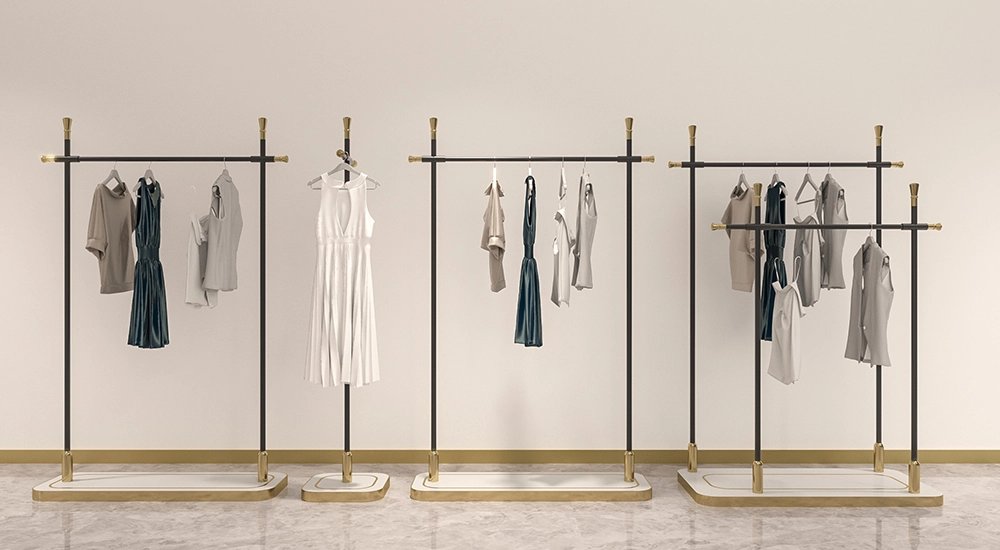
RYLOR
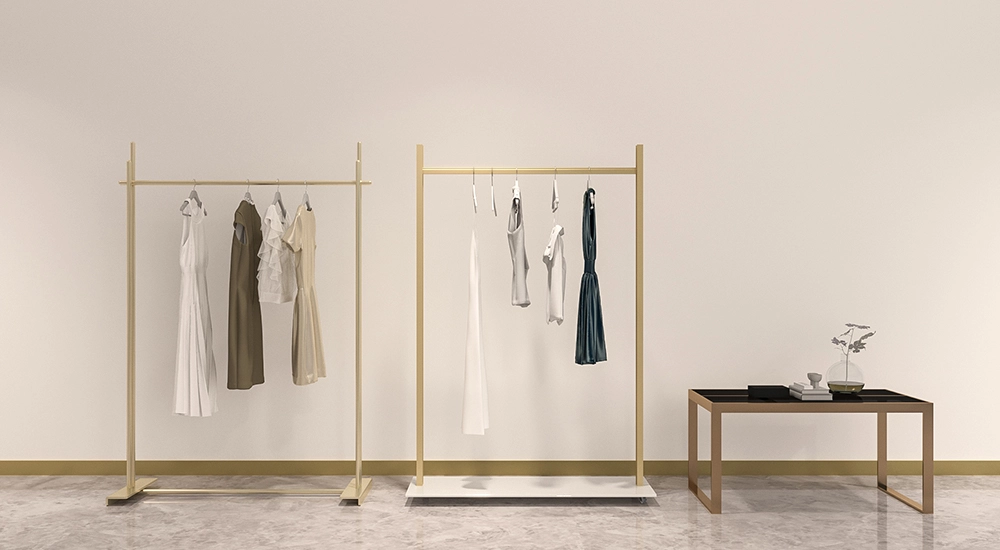
FLEEK
Elegant gold free-standing custom clothing display rack set with multi-function display table
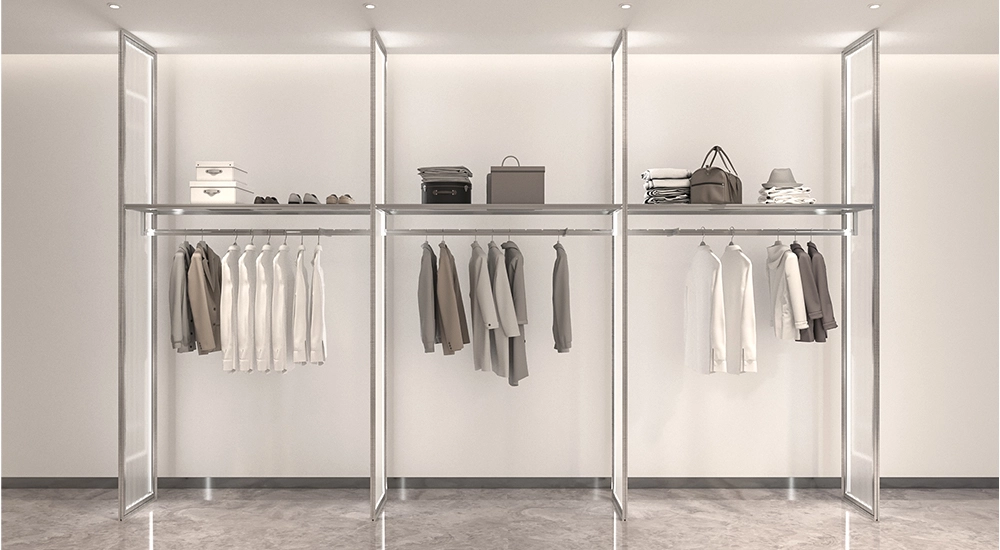
VISO
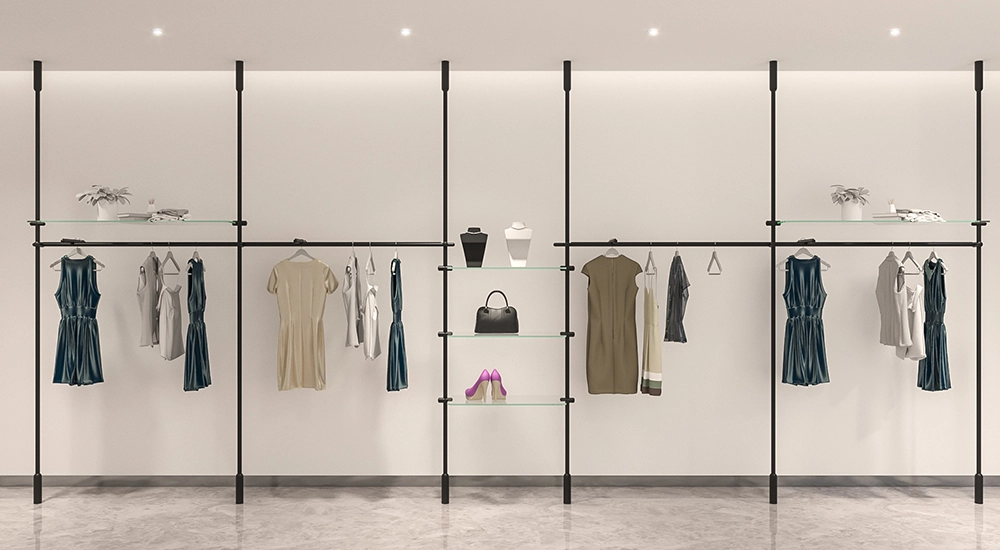
STAX
Copyright © 2024 RUMIS All Rights Reserved. Designed by Gooeyun

Facebook
LinkedIn
Instagram