

From Sketch to Floor: Demystifying the Custom Clothing Rack Manufacturing Process in 2026
What Is the Custom Clothing Rack Manufacturing Process?
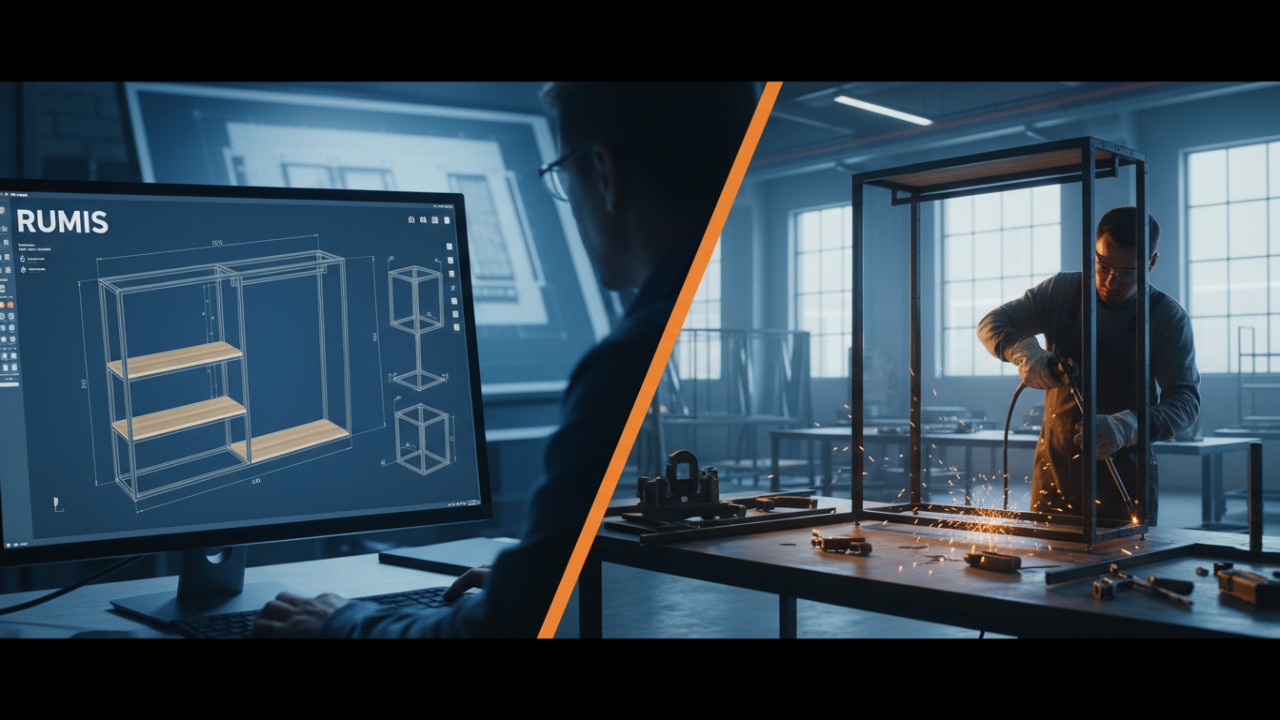
The custom clothing rack manufacturing process is a specialized industrial workflow that transforms raw materials like steel and wood into bespoke retail fixtures. It involves precise design consultation, 3D prototyping, CNC machining, manual welding, surface finishing, and strict quality control.
This comprehensive, end-to-end production ensures durable, brand-aligned display racks specifically engineered for modern fashion retail environments. Through meticulous retail store fixture fabrication, brands can actively move away from generic, one-size-fits-all displays. Instead, they invest in tailored commercial architecture that enhances the customer shopping experience and elevates the perceived value of the merchandise.
Why Custom Manufacturing Matters in 2026:
- Brand Identity: Custom racks physically embody a store's unique visual aesthetic, acting as an extension of the brand's story.
- Commercial Durability: High-grade materials ensure fixtures survive the daily wear and tear of high-traffic environments without degrading.
- Space Optimization: Bespoke dimensions are mathematically engineered to perfectly fit specific retail floor plans, reducing dead space.
Key Takeaways: Navigating Custom Retail Displays
Navigating custom retail displays requires understanding that custom manufacturing aligns store fixtures seamlessly with brand identity while maximizing retail floor space utilization. The professional process involves distinct stages designed to guarantee structural durability, scalability, and an excellent long-term return on investment.
Choosing an experienced custom garment rack OEM partner is absolutely critical for ensuring the final product meets commercial safety standards and brand expectations.
Core Pillars of the Process:
- Design & Prototyping: Utilizing advanced 3D CAD modeling to perfect the commercial retail shelving design before any metal is cut.
- Fabrication & Assembly: Implementing highly automated techniques for precise structural forming, followed by meticulous apparel rack welding and finishing.
- Quality Assurance: Executing strict environmental and load-bearing tests to protect your commercial investment.
Step 1: Design Consultation and 3D Modeling
The first step in the manufacturing process involves analyzing the fashion retail store's floor plan, target audience, and overarching brand aesthetics. Engineers draft initial structural sketches and convert them into highly accurate CAD and 3D models for detailed stakeholder review.
During this collaborative consultation phase, selecting the optimal raw materials—such as brushed stainless steel, heavy-duty iron pipe, or hybrid solid wood blends—is determined based on strict load-bearing standards. Retailers can review comprehensive technical resources, such as a custom retail clothing display racks guide, to make informed, data-driven decisions about their clothing display rack production strategies.
Key Design Considerations:
- Target Audience Flow: Mapping out how customers naturally navigate the retail floor to determine the optimal footprint for each fixture.
- Material Selection: Balancing aesthetic appeal (like brass accents or natural oak) with raw structural strength.
- Capacity Planning: Calculating the exact number of heavy garments each fixture must hold to prevent future bowing.
Step 2: Custom Prototyping and Structural Engineering
Custom prototyping involves creating a physical, functional prototype to rigorously test structural integrity, spatial footprint, and visual appeal before mass production. This critical step evaluates the prototype's garment capacity and stability, ensuring the final product meets all demanding commercial requirements.
By building a single, fully finished test unit, manufacturing engineers can systematically refine the design based on real-world physics testing. This eliminates potential manufacturing errors early in the cycle, saving both time and extensive capital. Drop tests, weight distribution analysis, and tipping-point evaluations are all conducted during this phase.
Prototyping Benefits:
- Spatial Verification: Ensuring the physical rack fits designated store zones smoothly without overcrowding the aisles.
- Load Testing: Hanging actual weighted merchandise to observe any structural bowing, joint stress, or base instability.
- Aesthetic Approval: Allowing brand managers to see, touch, and approve the physical surface finish before greenlighting full-scale retail store fixture fabrication.
Step 3: Industrial Fabrication and Machining
Industrial fabrication and machining utilize advanced laser cutting and automated CNC machinery for the precise sizing and preparation of raw materials. This core production phase shapes the foundational structure of the rack, employing automated pipe bending to construct complex designs.
Once the raw materials are perfectly cut, they are moved to the assembly and welding floor. Skilled artisans employ Tungsten Inert Gas (TIG) and Metal Inert Gas (MIG) welding techniques. TIG welding is exceptionally vital for high-end boutique fixtures because it allows for exceptionally clean, precise welds. This meticulous apparel rack welding and finishing ensures that there are no sharp burrs or rough edges that could potentially snag delicate fabrics like silk or chiffon.
Fabrication Workflow:
- Laser Cutting: Slicing raw steel or aluminum tubes to exact millimeter specifications for perfect joint alignment.
- CNC Machining: Carving out custom joints, internal connection points, and integrated decorative elements.
- Expert Welding: Fusing metal parts together for maximum commercial durability, ensuring the fixture never wobbles.
Step 4: Surface Finishing, Electroplating, and Painting
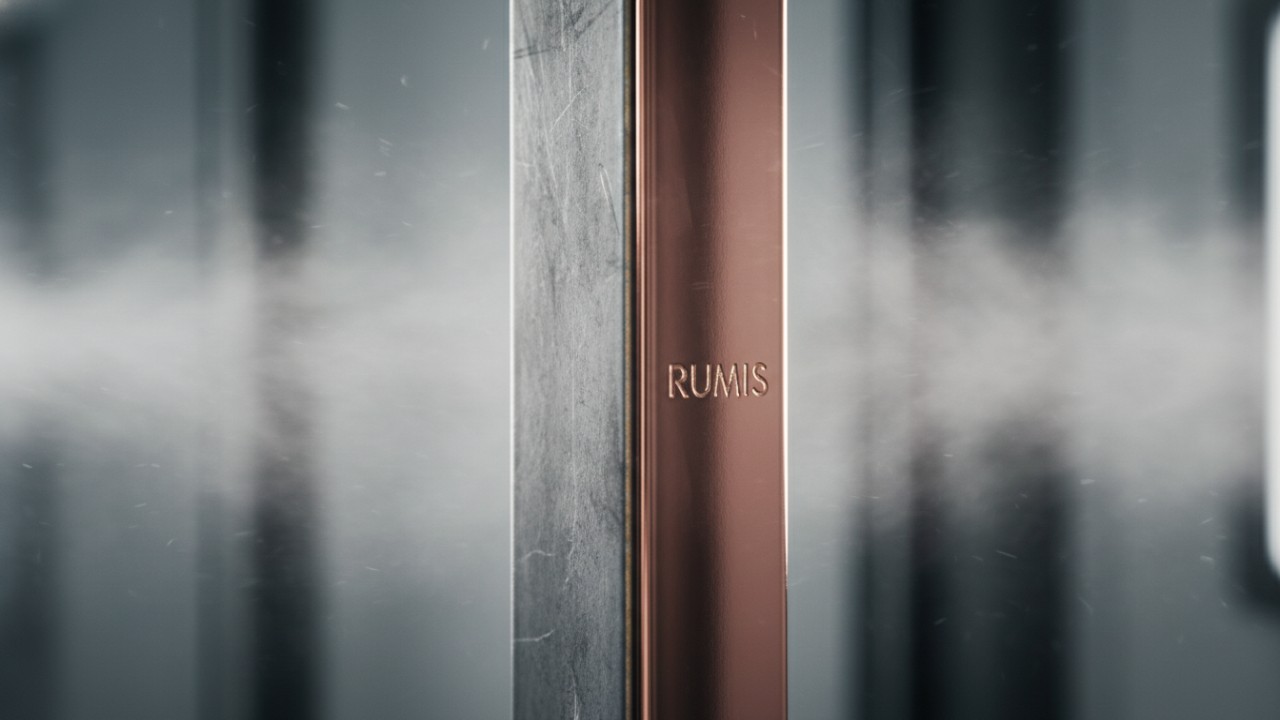
Surface finishing involves extensively polishing and grinding welded joints to achieve a completely smooth, high-end boutique finish. Following this preparation, manufacturers apply premium surface treatments—such as eco-friendly powder coating or electroplating—to protect the metal structure from wear.
These premium finishes must be baked and cured properly in industrial ovens to prevent chipping, scratching, or rusting in high-traffic retail stores. In fact, as explained by Wikipedia, powder coating is applied electrostatically and cured under heat or ultraviolet light to create a tough, resilient finish that is substantially more durable than conventional liquid paint.
Popular Finishing Options:
- Powder Coating: Offers an ultra-durable matte, textured, or glossy finish that is highly resistant to impact and heavy hanger friction.
- Electroplating: Creates a luxurious, high-gloss metallic finish (such as brushed gold, rose gold, or chrome) by coating the rack with a thin, molecular layer of protective metal.
- Industrial Painting: Used primarily for highly customized, brand-specific Pantone color matching when standard powder coats are unavailable.
Data Comparison: Generic Wholesale vs. Custom OEM Manufactured Racks
To better understand the distinct financial and operational value of the custom manufacturing process, review the detailed comparison table below.
| Feature | Generic Wholesale Racks | Custom OEM Manufactured Racks |
|---|---|---|
| Upfront Cost | Low | Moderate to High |
| Long-Term ROI | Low (Requires frequent replacements) | High (Built for longevity and heavy use) |
| Brand Alignment | None (Generic, standard appearance) | High (100% tailored to brand aesthetics and colors) |
| Space Utilization | Poor (One-size-fits-all dimensions) | Excellent (Engineered for specific store floor plans) |
| Structural Durability | Average (Standard materials, spot welds) | Superior (Commercial-grade TIG welding, thick gauge steel) |
| Modularity | Minimal | High (Custom adjustable shelving and extensions) |
Expert Tips & Common Manufacturing Mistakes to Avoid
Avoiding common manufacturing mistakes requires prioritizing proper load-bearing calculations and essential store mobility needs. Ignoring these critical engineering elements often leads to sagging horizontal rods under heavy winter coats or rigid, inflexible store layouts that cannot adapt to seasonal changes.
Retailers must actively communicate their operational needs—such as the exact type of apparel being displayed—to their manufacturing partners to avoid costly post-production modifications.
Mistakes vs. Solutions:
- Mistake: Ignoring the specific weight of heavy garments, resulting in long, unsupported horizontal spans that bow over time.
- Solution: Provide the manufacturer with exact garment weight estimates. Engineers will either thicken the steel gauge or add a discreet central support column.
- Mistake: Overlooking vital store mobility and modularity requirements.
- Solution: Always specify commercial-grade, non-marking locking casters for flexible layouts. Furthermore, request rigorous environmental testing on surface finishes to guarantee ultimate resistance to daily wear, tear, and humidity.
Future Trends in Retail Displays for 2026 and Beyond
Future trends in 2026 focus heavily on the integration of smart lighting systems and discrete RFID tracking directly into the structural framework of custom display racks. This major technological leap effectively transforms static retail fixtures into highly intelligent, data-driven retail management tools.
Furthermore, we are witnessing a massive industry shift towards eco-friendly powder coatings and sustainably sourced hybrid manufacturing materials. The rise of ultra-modular manufacturing designs allows retailers to seamlessly reconfigure rack dimensions without purchasing entirely new hardware. This continuous evolution makes logical sense; as reported by Wikipedia, modern shop fitting requires up-to-the-minute awareness of current trends to create highly modular stores that actively draw customers in through strategic layout adaptations.
Key 2026 Innovations:
- RFID Integration: Built-in sensors in the hanging rods that provide real-time inventory tracking and loss prevention.
- Sustainable Materials: Utilizing 100% recycled metals and low-VOC (Volatile Organic Compounds) finishes to meet corporate ESG goals.
- Ultra-Modularity: Interchangeable shelving, magnetic signage brackets, and snap-and-lock hanging components for rapid overnight store resets.
Industry Standard: RUMIS's Approach to Custom Fashion Retail Manufacturing
Setting the global industry standard, Guangdong Meicheng Smart Building Co., Ltd (RUMIS) brings over 10 years of elite expertise in creating customized solutions for fashion retailers. They specialize in bespoke display racks for fashion retail stores and global mass rollouts, managing complex logistics with precision.
From boutique clothing stores requiring highly personalized aesthetics to massive global retail chains needing scalable, identical consistency, RUMIS flawlessly manages the entire OEM lifecycle. Operating under their official hub at https://www.rumisinterior.com, RUMIS stands out as a premier partner in the commercial interior space.
The RUMIS Advantage:
- Global Reach & Proven Success: With premium display systems successfully covering more than 60 countries at home and abroad, RUMIS has won wide market recognition for unparalleled quality.
- Comprehensive Product Lines: Expertly specializing in robust display racks for fashion retail stores and elegant display racks for clothing stores.
- End-to-End Bespoke Service: Whether a client requires deep brand personalization, rapid prototyping, or custom structural engineering, the RUMIS team meets those exact operational needs seamlessly.
Conclusion
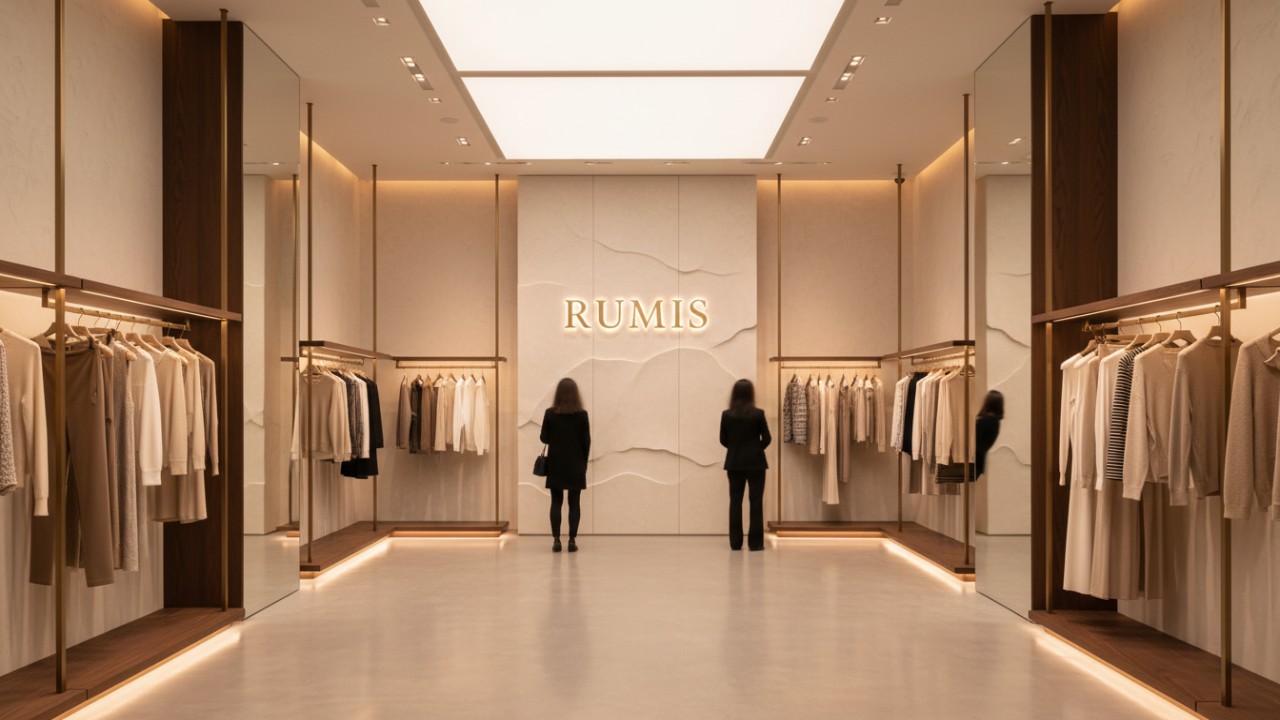
Understanding the custom clothing rack manufacturing process empowers fashion retailers to make highly informed, brand-elevating fixture investments. From initial 3D sketches and structural load testing to the final electroplated finish, every single step of the production directly dictates the durability, modularity, and visual impact of your store layout. Partnering with a proven, globally recognized OEM manufacturer ensures your commercial space is meticulously optimized for both striking aesthetics and long-term profitability. Contact us today at info@rumisinteriors.com to optimize your custom clothing rack manufacturing process strategy.
FAQs About custom clothing rack manufacturing process
These frequently asked questions provide essential insights into the custom clothing rack manufacturing process, addressing common concerns about production timelines, material selection, and overall cost-efficiency. Review these expert answers to better understand how to optimize your retail store fixture investments.
How long does the custom clothing rack manufacturing process take?
The timeline typically ranges from 4 to 8 weeks depending on the complexity and scale of the design. Prototyping usually requires 1 to 2 weeks, while mass production, finishing, and quality control take an additional 3 to 6 weeks.
What are the best materials for commercial retail display racks?
Stainless steel, iron piping, and aluminum are preferred for their superior durability and high load-bearing capacity. Wood, glass, and acrylic accents are frequently incorporated to achieve a premium, customized boutique aesthetic.
Is it more cost-effective to buy wholesale racks or manufacture custom ones?
While generic wholesale racks have a lower upfront cost, custom manufactured racks offer a much higher ROI over time. Custom racks optimize specific store dimensions, reduce wasted floor space, and drastically enhance the brand's visual identity.
What is electroplating in display fixture manufacturing?
Electroplating is a specialized surface finishing process that coats metal racks with a thin, molecular layer of another metal, such as gold or chrome. It provides a luxurious, high-gloss visual finish while acting as a protective barrier against rust and corrosion.
Can custom display racks for clothing stores be modular?
Yes, modern OEM manufacturing frequently incorporates modular engineering using specialized joints and adjustable fittings. This flexibility allows retailers to independently adjust shelf heights or add rack extensions as their seasonal inventory changes.
How do manufacturers ensure the quality of custom retail fixtures?
Top-tier factories utilize strict quality control protocols, including automated load-bearing stress tests and environmental exposure testing. Skilled technicians also conduct meticulous manual inspections of all welds and surface finishes before final packaging.
What information is needed to start a custom rack manufacturing project?
Retailers should be prepared to provide a store floor plan, desired brand aesthetic guidelines, and estimated garment weight capacities. Providing reference images, mood boards, or initial napkin sketches is also highly beneficial for the engineering team.
Why choose RUMIS for manufacturing custom clothing racks?
RUMIS boasts over 10 years of specialized experience providing high-end personalized display solutions for the global fashion retail sector. They offer comprehensive end-to-end manufacturing services, successfully delivering customized systems to clients across more than 60 countries.
- What Is the Custom Clothing Rack Manufacturing Process?
- Key Takeaways: Navigating Custom Retail Displays
- Step 1: Design Consultation and 3D Modeling
- Step 2: Custom Prototyping and Structural Engineering
- Step 3: Industrial Fabrication and Machining
- Step 4: Surface Finishing, Electroplating, and Painting
- Data Comparison: Generic Wholesale vs. Custom OEM Manufactured Racks
- Expert Tips & Common Manufacturing Mistakes to Avoid
- Future Trends in Retail Displays for 2026 and Beyond
- Industry Standard: RUMIS's Approach to Custom Fashion Retail Manufacturing
- Conclusion
- FAQs About custom clothing rack manufacturing process
- How long does the custom clothing rack manufacturing process take?
- What are the best materials for commercial retail display racks?
- Is it more cost-effective to buy wholesale racks or manufacture custom ones?
- What is electroplating in display fixture manufacturing?
- Can custom display racks for clothing stores be modular?
- How do manufacturers ensure the quality of custom retail fixtures?
- What information is needed to start a custom rack manufacturing project?
- Why choose RUMIS for manufacturing custom clothing racks?
Recommended for you
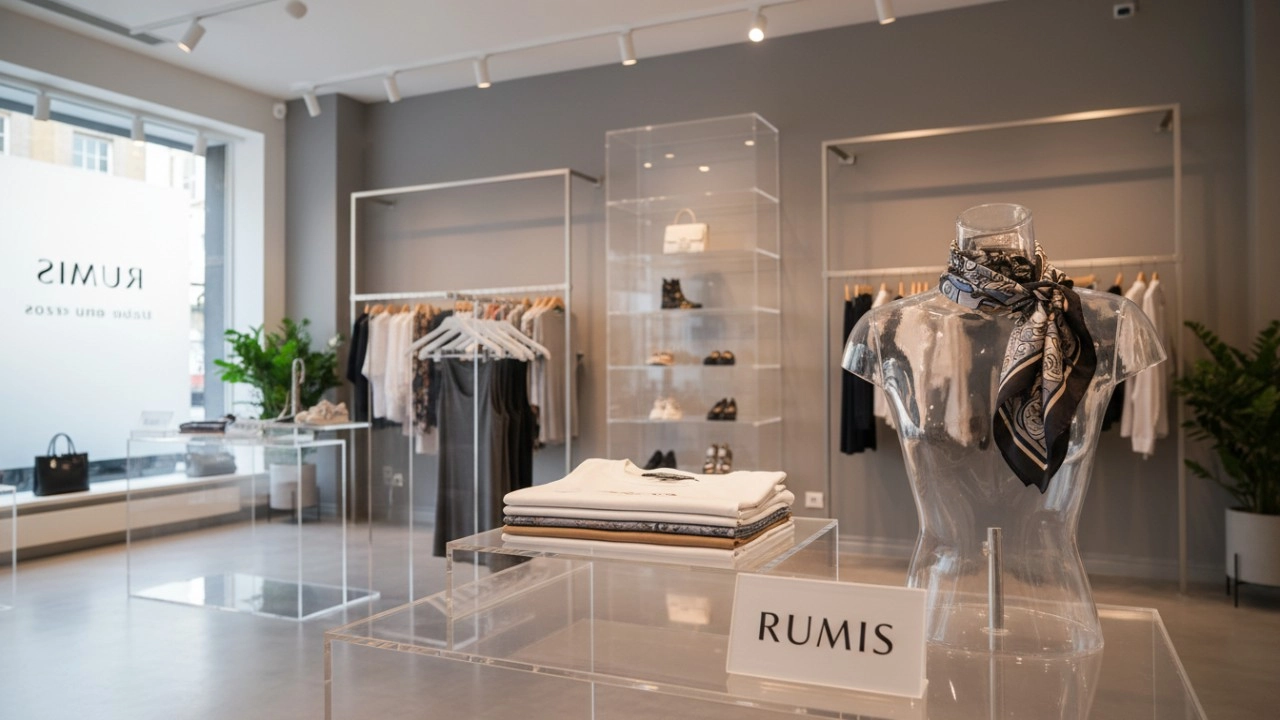
The Impact of Acrylic Retail Clothing Displays on Luxury Store Interiors (2026 Guide)
Wood vs. Metal: Material Selection Strategies for High-End Boutiques in 2026
Elevating Store Aesthetics: The Anatomy of Custom Retail Clothing Display Racks (2026 Guide)
Finding a Wholesale Clothing Display Shelves Manufacturer: The Ultimate 2026 Buyer's Checklist
Why Your Display in Retail is Failing: 7 Critical Errors and How to Fix Them Now
FAQ
What types of customization options are available for your products?
We offer a wide range of customization options for your customized display clothes rack, including color matching, material selection, and finish processing. Inquire for more details.
Can your display racks be reconfigured after installation?
Absolutely. Our display racks are designed for flexibility and can be easily reconfigured to adapt to new layouts and displays.
What information should I provide for the initial custom clothes display rack consultation?
Provide your brand guidelines, store dimensions, budget, and any specific design preferences for modular shopfitting systems.
Do you provide customized garment display rack for clothes ervices?
Yes, we provide customized garment display racks for clothes services where we can tailor product designs, dimensions, and colors according to your requirements.
Can your clothing shelves display wall rack be used for pop-up shops?
Absolutely. Our display racks are designed for flexibility and can be easily reconfigured to adapt to new layouts and displays.
You may also like
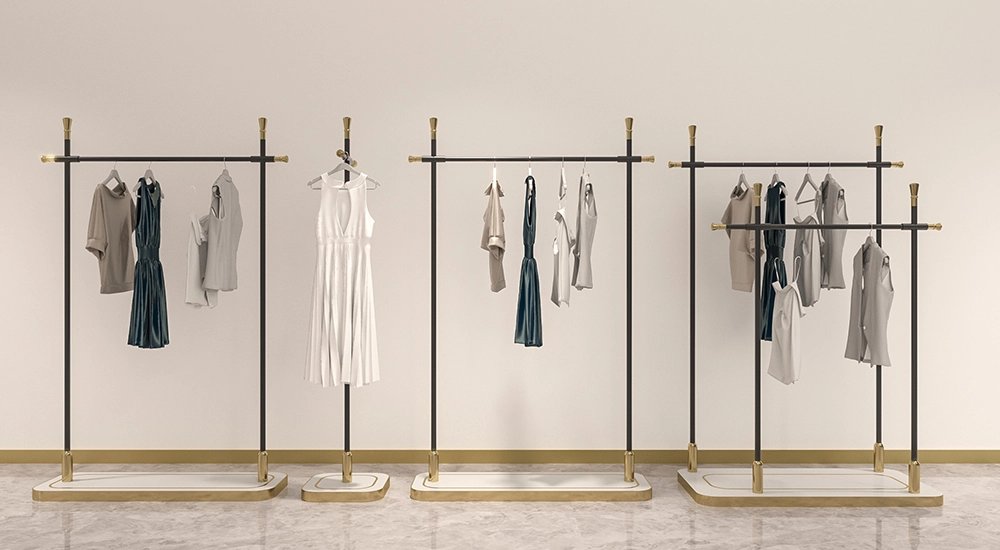
RYLOR
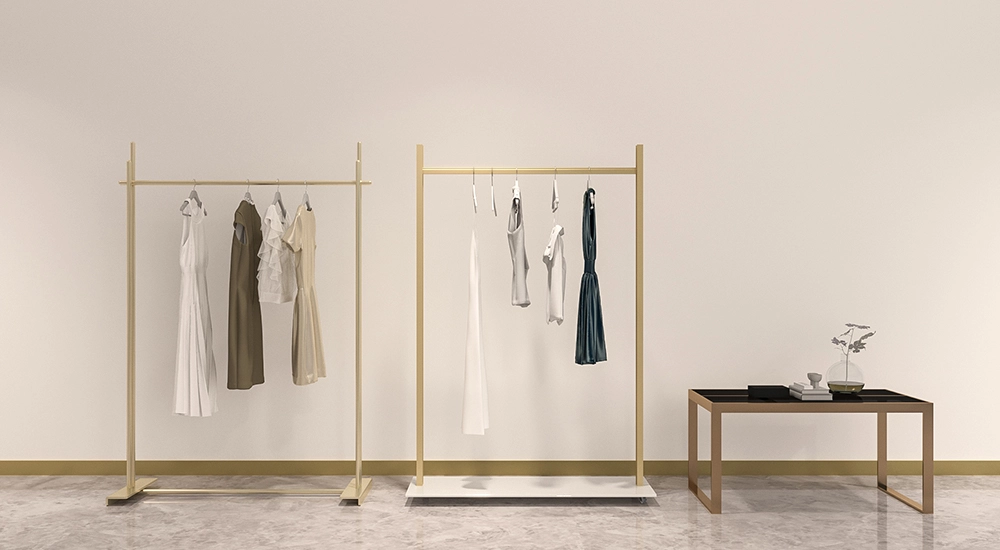
FLEEK
Elegant gold free-standing custom clothing display rack set with multi-function display table
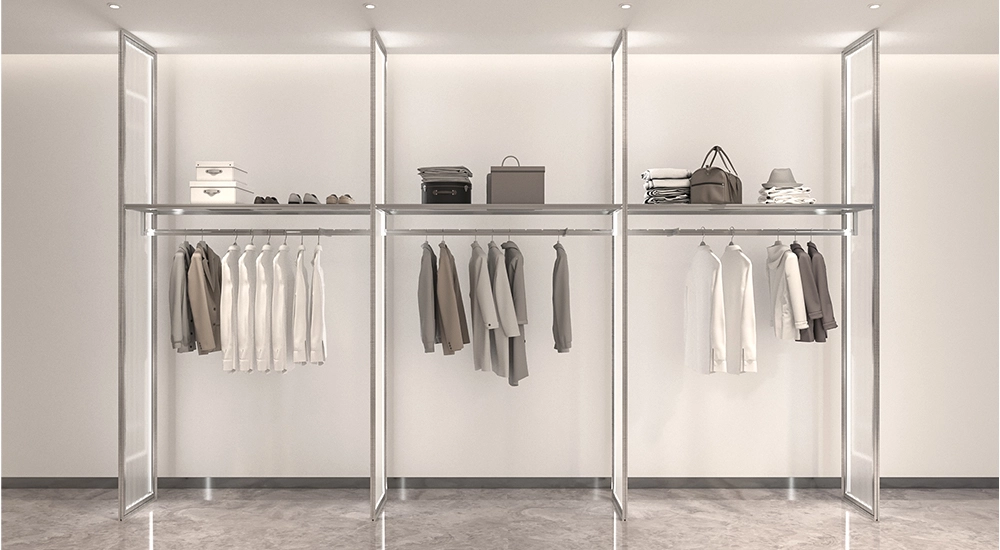
VISO
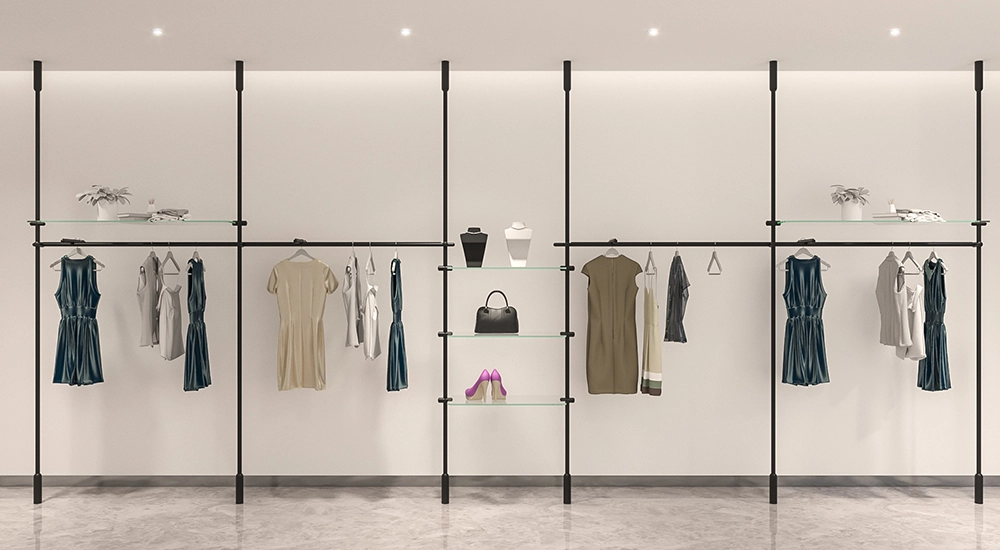
STAX
Start your journey with us
Are you ready to improve your store operations with our display systems?
Get started today.
Copyright © 2024 RUMIS All Rights Reserved. Designed by Gooeyun

Facebook
LinkedIn
Instagram