

Why Your Display in Retail is Failing: 7 Critical Errors and How to Fix Them Now
In the rapidly evolving landscape of 2026 retail, the physical store has undergone a radical transformation. It is no longer just a warehouse for inventory; it is a stage for experience, community, and immediate gratification. However, despite the surge in "phygital" integration, many retailers are still relying on visual merchandising tactics from a decade ago.
The modern shopper, often assisted by AI shopping agents, processes visual information faster than ever. The old adage of the "3-second rule"—the time you have to arrest a customer's attention—has tightened. In the age of Agentic Commerce, if your display doesn't communicate value, accessibility, and interactivity instantly, it is invisible.
A "failing" display in 2026 is defined not just by zero sales, but by its inability to arrest at least 3% of passing traffic. This article dissects the seven critical errors retailers make, ranging from the misuse of the decompression zone to material failures, and explores how custom retail fixtures are the antidote to declining conversion rates.
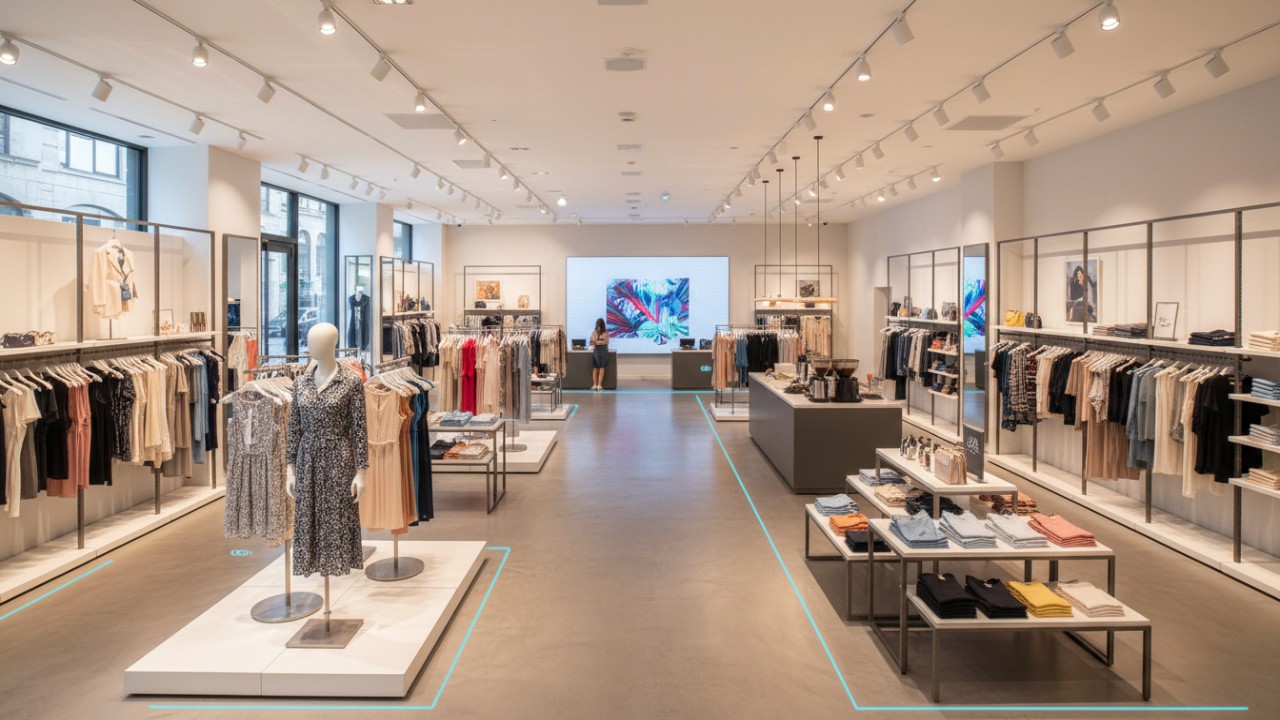
POP vs. POS: Knowing the Difference for Maximum ROI
Before diving into specific mistakes, it is crucial to clarify the foundational confusion that plagues retail floor plans: the conflation of Point of Purchase (POP) and Point of Sale (POS).
Point of Purchase (POP) definitions vary, but in a strategic context, POP refers to the "decision zone." This is the aisle, the endcap, or the freestanding display where the customer discovers the product and decides to put it in their cart. Conversely, the Point of Sale (POS) is the "transaction zone"—the register or checkout kiosk where the deal is finalized.
The ROI Implication
A common visual merchandising error is utilizing POS tactics in POP areas. POS displays should focus on impulse, speed, and low-consideration add-ons (gum, batteries, gift cards). POP displays, however, require education and storytelling.
To maximize point of purchase display ROI, retailers must differentiate the hardware. A POS fixture needs to be compact and secure. A POP fixture, however, needs to be expansive and informative. If you place a high-information, complex educational display at the checkout line, you create a bottleneck. If you place a low-context "grab-and-go" bin in the middle of an aisle, you miss the opportunity to upsell.
Mistake #1: The 'Decompression Zone' Blindspot
Perhaps the most enduring mistake in retail layout design is overcrowding the entrance. Retail anthropologists, including the legendary Paco Underhill, identified the "Decompression Zone"—the first 5 to 15 feet inside a store—decades ago. In 2026, this rule is more relevant than ever due to the sensory overload customers face.
The Sales Dead Zone
When a customer enters your store, they are physically and mentally adjusting to the new environment. They are changing their walking speed, adjusting their eyes to the lighting, and orienting themselves. During these few seconds, they are essentially blind to merchandise.
Retailers often place their most expensive custom retail fixtures and new product launches right at the door, thinking it ensures maximum visibility. In reality, customers breeze past these displays without seeing them. This is a "sales dead zone."
The Fix: 10 Feet Back and to the Right
The actionable fix is counter-intuitive: move your high-margin displays deeper into the store. Start your merchandising strategy at least 10 feet past the threshold. Furthermore, because the majority of the population is right-handed, there is a natural psychological tendency to drift right upon entry. Placing a high-impact, custom-fabricated display unit just past the decompression zone to the right can increase interaction rates by over 20%.
Mistake #2: Ignoring Accessibility and ADA Compliance
In 2026, inclusivity is not just a legal requirement; it is a massive market opportunity. Ignoring accessibility features in your display design alienates a significant portion of the population and opens the door to litigation.
The Cost of Exclusionary Design
A display that is too high for a wheelchair user or crowds an aisle so that a stroller or mobility device cannot pass is a display that is actively rejecting sales. ADA standards for retail aisles generally require a minimum width of 36 inches for accessible routes, but many generic displays creep into this space, creating barriers.
Expanding the Addressable Market
Custom fixtures allow you to design specifically for compliance without sacrificing aesthetics. Reach ranges are critical; items placed above 48 inches or below 15 inches are often inaccessible to many shoppers. By utilizing custom tiered shelving that keeps prime merchandise within the "universal reach zone," you ensure that your product is available to 100% of your foot traffic, effectively expanding your total addressable market.
Mistake #3: Material Failure – Cheap vs. Durable Cost Analysis
Retailers often fall into the trap of looking at the upfront unit cost rather than the Total Cost of Ownership (TCO). In an attempt to cut the budget, procurement teams may opt for generic corrugated cardboard or low-grade acrylics for semi-permanent displays.
The Durability Equation
While cardboard is excellent for short-term localized promotions, it degrades rapidly. Within two weeks, corners are bent, graphics are peeling, and the brand perception plummets. In contrast, experienced retail display manufacturers advocate for varied material mixes based on longevity:
· Metal (Steel/Aluminum): High durability, load-bearing, essential for grocery and hardware. It communicates permanence and authority.
· High-Grade Acrylic: Offers high visibility and a premium feel, ideal for cosmetics and electronics.
· Custom Wood/Composites: essential for building brand warmth and authority in B2B or boutique retail.
The Hidden Cost of Replacement
If a cheap fixture costs $50 but needs replacement every three months due to wear and tear, the annual cost is $200 plus labor. A custom metal and wood fixture might cost $300 upfront but last for three years. The custom option is not only cheaper in the long run but maintains a pristine brand image that justifies higher price points for the merchandise it holds.
Mistake #4: Data Blindness (The 2026 Tech Gap)
We are living in the era of phygital retail trends, yet many displays remain analog islands in a digital ocean. A major mistake is failing to integrate data capture capabilities into the physical shelf.
Beyond the Transaction
Traditional metrics track sales after they happen. They do not tell you how many people picked up the item, looked at it, and put it back. This is the "Tech Gap."
The Intelligent Fixture
Forward-thinking retailers are embedding IoT sensors and cameras into custom fixtures. These smart shelves can track:
· Dwell Time: How long a customer stands in front of the display.
· Interaction Rate: How many times a product is handled.
· Conversion Rate: The ratio of touches to purchases.
According to National Retail Federation 2026 trends, the integration of AI and physical retail data is becoming a primary driver for inventory optimization. Failing to equip your displays with the infrastructure for this data collection (power integration, sensor mounts) renders your merchandising strategy blind.
Mistake #5: Poor Lighting Implementation
Lighting is often an afterthought, yet it is one of the most potent visual merchandising tips available. Standard overhead store lighting creates shadows on lower shelves, making products look dull and unappealing.
The Lumen Effect
A common mistake is relying solely on ambient store lighting. Products on the bottom two shelves of a standard gondola often receive 60% less light than those at eye level. Custom fixtures fix this by integrating LED strip lighting directly into the shelving.
· Shelf-edge lighting illuminates the product face.
· Backlighting creates a premium silhouette effect.
· Color temperature control ensures the product looks as true-to-life as possible (e.g., cool white for diamonds, warm white for bakery items).
Mistake #6: The "One-Size-Fits-All" Fallacy
Using generic "catalog" fixtures across different product categories is a sales killer. A rack designed for hanging t-shirts is woefully inadequate for displaying heavy denim or fragile accessories. This approach ignores the specific physics and psychology of different retail verticals.
Niche Strategies: Tailoring Displays by Industry
· Grocery & Liquor: Requires high-volume, extremely durable metal racking capable of sustaining heavy static loads without bowing. The focus here is on density and stock levels.
· Boutique Fashion: Demands minimalism. Custom joinery with integrated lighting and significant negative space increases the perceived value of the garment.
· Electronics: Requires interactive, security-focused acrylic podiums. The display must manage power cords for live demos while securing the device against theft.
Mistake #7: Security Over-Engineering (Friction)
The final mistake is a direct response to shrink (theft), but it often kills legitimate sales. Locking products behind glass cabinets or using aggressive "spider wrap" security tags creates friction.
The Friction-Sales Curve
In 2026, shoppers demand autonomy. If a customer has to hunt down a staff member to unlock a $30 item, they will likely abandon the purchase. The mistake is prioritizing loss prevention over customer experience to an extreme degree.
The Custom Solution
Custom fixtures can mitigate this through "open sell" security. This involves tethering systems that allow the customer to pick up, feel, and experience the product while it remains mechanically secured to the fixture. This balances security with the tactile experience necessary for point of purchase display ROI.
Conclusion
In 2026, a retail display is more than a shelf—it is a high-performance asset that must stop traffic, communicate value, and withstand high traffic. The days of passive shelving are over.
Retailers who continue to ignore the Decompression Zone, violate ADA accessibility norms, or opt for cheap, short-term materials are actively undermining their own sales. By transitioning from generic solutions to data-backed, custom retail fixtures, businesses can turn invisible furniture into profitable, interactive touchpoints.
To thrive in this era of Agentic Commerce, you must fix the "Tech Gap" by integrating phygital tools and respect the nuances of your specific industry. Don't let poor placement or material failure destroy your product's potential; invest in manufacturing solutions that build brand authority and drive conversion.
FAQs
What is the difference between POP and POS displays?
POP (Point of Purchase) refers to where customers decide to buy, often in the aisles or special discovery zones. POS (Point of Sale) is where the transaction happens, like the checkout counter. Effective strategies use POP for education and discovery, while POS is utilized for speed and impulse purchases.
How much does a custom retail display cost?
Costs vary wildly by material and complexity. Corrugated cardboard units may cost $20-$50, while permanent custom metal or wood fixtures with integrated lighting can range from $200 to $2,000+ per unit. However, custom fixtures generally offer higher ROI over time due to durability and brand alignment.
What are the ADA requirements for retail displays?
Displays must generally allow for a minimum 36-inch wide accessible route for wheelchairs. Furthermore, items should be placed within reach ranges (typically between 15 and 48 inches from the floor) to ensure they are accessible to wheelchair users and those with limited mobility.
If you have further questions or require professional solutions for your retail environment, please feel free to contact us at any time.
- POP vs. POS: Knowing the Difference for Maximum ROI
- The ROI Implication
- Mistake #1: The 'Decompression Zone' Blindspot
- The Sales Dead Zone
- The Fix: 10 Feet Back and to the Right
- Mistake #2: Ignoring Accessibility and ADA Compliance
- The Cost of Exclusionary Design
- Expanding the Addressable Market
- Mistake #3: Material Failure – Cheap vs. Durable Cost Analysis
- The Durability Equation
- The Hidden Cost of Replacement
- Mistake #4: Data Blindness (The 2026 Tech Gap)
- Beyond the Transaction
- The Intelligent Fixture
- Mistake #5: Poor Lighting Implementation
- The Lumen Effect
- Mistake #6: The "One-Size-Fits-All" Fallacy
- Niche Strategies: Tailoring Displays by Industry
- Mistake #7: Security Over-Engineering (Friction)
- The Friction-Sales Curve
- The Custom Solution
- Conclusion
- FAQs
Recommended for you
How to Choose a Clothing Display Rack That Boosts Your Sales by 30% (2026 Guide)
The Future of Retail Display Racks: Smart, Sustainable, and Modular Solutions
Retail Display Wall Systems 2026: Smart Modular Walls That Maximize Store Profitability
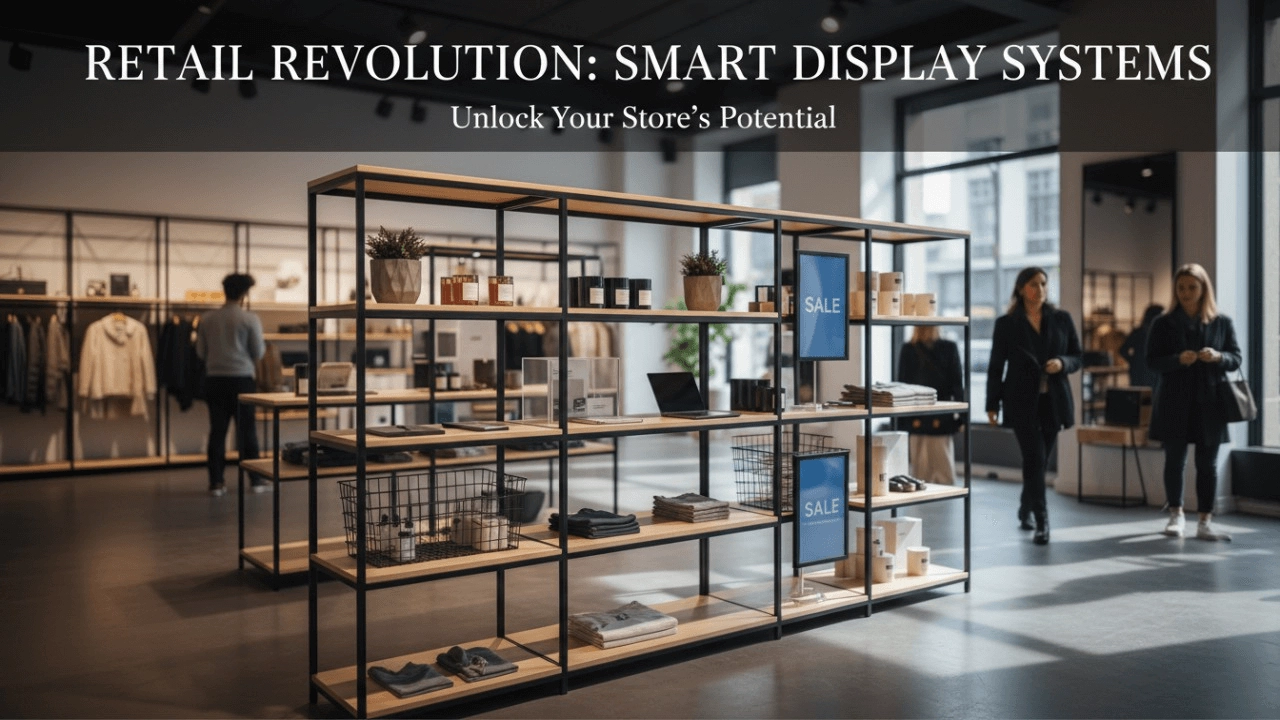
The Strategic Aspects That Define an Effective Retail Display System
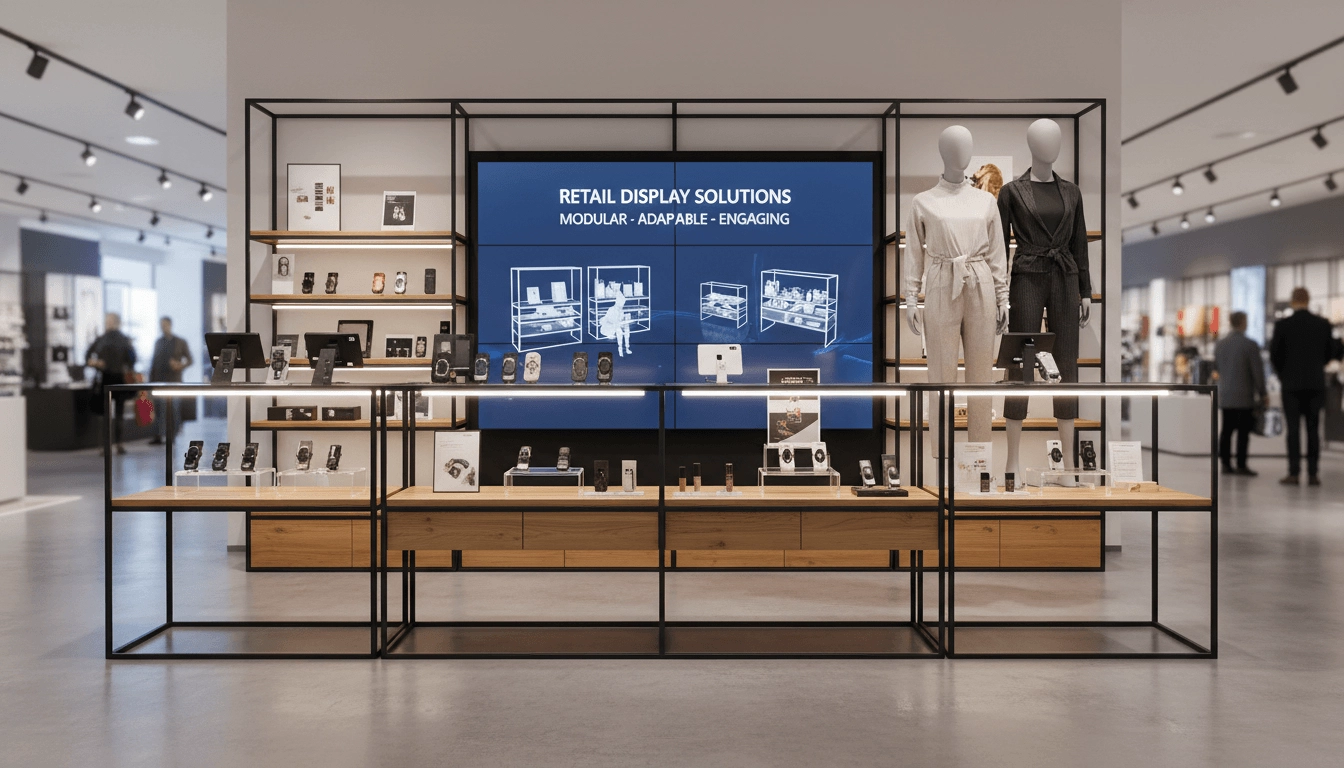
Retail Display Systems for Fashion Brands: Design, Innovation & Custom Solutions
FAQ
Can your clothing shelves display wall rack be used for pop-up shops?
Absolutely. Our display racks are designed for flexibility and can be easily reconfigured to adapt to new layouts and displays.
Do you provide shipping and delivery services for a frame display stands?
Yes, we offer reliable shipping and delivery services for fashion clothing rack displays, working with trusted logistics partners to guarantee prompt delivery.
How long does it take to receive a customized display clothes rack order?
The turnaround time for custom clothes display rack orders varies depending on the complexity of the request and our current production schedule. We will provide you with an estimated timeline when you place your order.
Are the display racks compatible with different types of fashion merchandise?
Yes, our display racks are designed to accommodate a wide range of fashion merchandise, from clothing to accessories.
How can I place an order for your display racks?
You can reach us by phone, email, or through the contact form on our website. After receiving your display racks order request, we will communicate all the details with you and provide you with a quotation.
You may also like
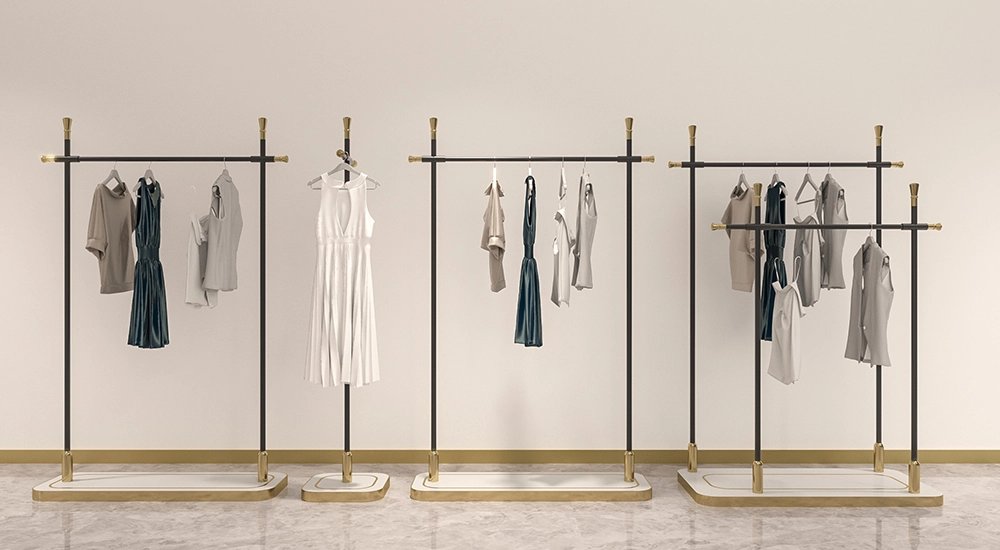
RYLOR
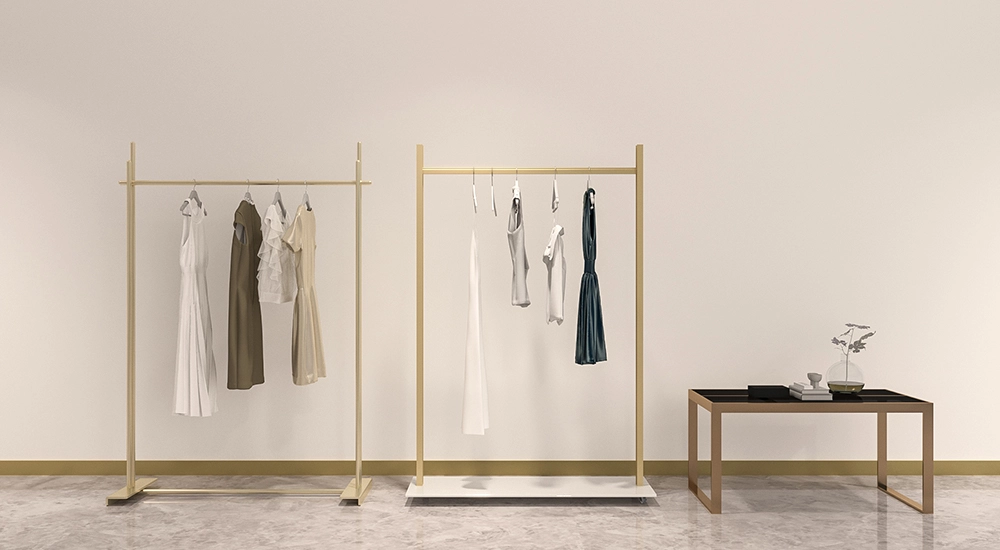
FLEEK
Elegant gold free-standing custom clothing display rack set with multi-function display table
VISO
STAX
Start your journey with us
Are you ready to improve your store operations with our display systems?
Get started today.
Copyright © 2024 RUMIS All Rights Reserved. Designed by Gooeyun

Facebook
LinkedIn
Instagram