

Benefits of Modular Retail Display Systems for Small Stores
- Why Small Retailers Should Rethink Store Fixtures
- What are modular retail display systems and why they matter for small stores
- Core features of modular systems that benefit small retailers
- Flexibility and space optimization with modular retail display systems
- Lower upfront cost and better lifecycle economics
- Cost comparison: modular vs fixed fixtures
- Speed to market and merchandising agility
- Improved inventory visibility and product presentation
- Supporting omnichannel strategies and click-and-collect
- Sustainability and end-of-life considerations
- Customizability and brand expression with modular retail display systems
- Case study: typical ROI timeline for a small clothing store
- Practical checklist for selecting a modular retail display system
- Comparison table: Key selection criteria
- Installation, staff training and ongoing maintenance
- RUMIS customized solutions for fashion retail manufacturer
- Why choose RUMIS for modular retail display systems?
- Implementation roadmap: pilot, measure, scale
- Common pitfalls and how to avoid them
- Conclusion: Are modular retail display systems right for your small store?
- FAQ
- References
Why Small Retailers Should Rethink Store Fixtures
Small-store owners face tight margins, limited floorspace, and fast-changing customer expectations. Choosing the right fixtures is not just an aesthetic decision; it's a strategic investment. Modular retail display systems address many operational and commercial pain points that small retailers encounter—improving merchandising speed, adapting to seasonal assortments, and maximizing conversion per square meter. Below we explore evidence-based benefits, implementation considerations, costs and ROI, and practical guidance for choosing a modular system aligned with brand goals and budget.
What are modular retail display systems and why they matter for small stores
Modular retail display systems are configurable fixtures made of interchangeable components—shelves, hooks, panels, bases and accessories—that can be reassembled into multiple layouts without full replacement. For small stores, the chief advantages are adaptability and lower long-term investment. Instead of committing to a single fixed layout, retailers can test merchandising concepts, scale displays with product volume, and reconfigure quickly for promotions or seasonal transitions. This agility translates directly into higher shelf productivity and reduced downtime during shop-floor changes.
Core features of modular systems that benefit small retailers
- Interchangeable components: mix-and-match parts let you change height, depth and display type.
- Tool-less or low-tool reconfiguration: staff can rearrange displays without specialized contractors.
- Compact, scalable units: suitable for narrow aisles and irregular spaces.
- Accessory ecosystem: signage holders, lighting, and digital mounts that attach to the same system.
Flexibility and space optimization with modular retail display systems
Space is often the limiting resource for small stores. Modular retail display systems let retailers optimize every linear foot. Adjustable shelving and detachable accessories enable high-density displays for fast-selling SKUs and more open presentations for High Quality lines. By tailoring fixture depth and orientation to SKU dimensions and customer flow, stores can increase sell-through without expanding footprint.
Practical example: swapping from stacked folded displays to single-hang face presentation on the same fixture can increase perceived stock availability while improving browsing ease—often increasing conversion for apparel categories.
Lower upfront cost and better lifecycle economics
While High Quality fixed fixtures can be expensive to design and manufacture, modular systems often reduce both initial expense and future capital outlay. Because components are reusable across seasons, small retailers avoid recurring costs for full fixture replacements. Over a 3–5 year period, modular systems typically show a lower total cost of ownership (TCO) when accounting for reconfiguration, repairs and refreshes.
Cost comparison: modular vs fixed fixtures
| Criteria | Modular Retail Display Systems | Fixed Fixtures |
|---|---|---|
| Upfront cost | Moderate; scalable purchases | High; custom design and production |
| Reconfiguration cost/time | Low; staff-adjustable | High; contractor often needed |
| Adaptability | High; reusable components | Low; fixed layout |
| Repair/parts replacement | Simple; replace individual parts | Complex; may require custom parts |
Sources: industry fixture cost studies and vendor whitepapers (see references).
Speed to market and merchandising agility
Small retailers need to respond quickly to trends and promotions. Modular retail display systems enable rapid on-floor changes—promotional bays, pop-up displays, or clearance islands can be created or removed in hours rather than days. Faster merchandising cycles allow small stores to capitalize on short-lived demand peaks and test assortments without prolonged disruption.
Improved inventory visibility and product presentation
Good presentation increases the perceived value of merchandise and reduces the time customers spend searching. Modular systems support targeted fixture designs that enhance product visibility—front-facing displays, tiered shelving and dedicated accessory mounts. Better presentation correlates with higher average transaction values in apparel and accessory categories. For small stores, the combination of efficient use of space and attractive display directly contributes to higher sales per square meter.
Supporting omnichannel strategies and click-and-collect
Small retailers increasingly operate in omnichannel environments. Modular retail display systems can be configured to integrate pickup lockers, click-and-collect counters, and digital kiosks without redesigning the store. By dedicating reconfigurable zones for e-commerce fulfillment or returns, small stores can maintain efficient customer service alongside in-store merchandising.
Sustainability and end-of-life considerations
Modular fixtures reduce waste because components are reused, repurposed or replaced individually instead of discarding entire units. Choosing recyclable materials (steel, aluminum, certain wood composites) and modular designs aligns with consumer expectations around sustainability—an important brand differentiator for independent retailers. Over time, reduced material consumption and fewer fixtures to manufacture improve the environmental footprint of store operations.
Customizability and brand expression with modular retail display systems
Small brands often rely on unique in-store experiences to differentiate from chains. Modular systems allow personalization—branded panels, custom colors, and signage attachments—while retaining the operational benefits of standard components. This balance between brand expression and operational efficiency is especially valuable for fashion and specialty clothing retailers that rotate visual themes seasonally.
Case study: typical ROI timeline for a small clothing store
While exact ROI varies, a practical example helps illustrate benefits. Consider a 120 sqm clothing boutique that replaces outdated fixed fixtures with modular retail display systems:
- Initial investment: modular fixtures — $8,000 (phased purchases)
- Estimated increase in conversion and AOV: 8–15% due to improved presentation and merchandising flexibility
- Operational savings: reduced reconfiguration labor and promotional downtime—estimated $1,200/year
- Payback period estimate: 12–24 months assuming modest sales lift
These figures are illustrative; actual results depend on traffic, product mix and execution. The advantages are most pronounced when modular systems are used strategically—rotating displays, highlighting best-sellers, and reducing stock-outs.
Practical checklist for selecting a modular retail display system
To choose the right modular system, evaluate:
- Scalability: Can you add or remove components as your assortment grows?
- Compatibility: Are accessories (lighting, signage) available and easy to install?
- Durability: What are the material specs and warranty terms?
- Service & parts: Are spare parts and local support available?
- Customization options: Can you brand panels or change finishes affordably?
- Return on use: Estimate conversion uplift and reduced fixture replacement costs.
Comparison table: Key selection criteria
| Selection Criteria | Why it matters | Questions to ask supplier |
|---|---|---|
| Modularity | Determines long-term flexibility | Can parts be mixed across generations of fixtures? |
| Material & finish | Impacts durability and brand look | Are finishes scratch-resistant; is coating low-VOC? |
| Compatibility with tech | Enables omnichannel services | Are digital mounts and power management available? |
| Lead time & replenishment | Reduces downtime between seasons | What are standard lead times and spare part availability? |
Installation, staff training and ongoing maintenance
One underrated benefit of modern modular systems is reduced dependency on external contractors. Most systems are designed for quick tool-less assembly. Invest in a one-day training for staff covering reconfiguration, basic repairs and safe loading. Maintain an inventory of common spare parts (brackets, shelf clips) to minimize downtime. Regular light maintenance—tightening connections, cleaning surfaces—extends fixture life and maintains brand presentation.
RUMIS customized solutions for fashion retail manufacturer
RUMIS customized solutions for fashion retail manufacturer. RUMIS has been a leading fashion retailer for over 10 years. We provide bespoke solutions for small and large fashion retail businesses with individual clothing displays. Our customized display rack solutions include display racks for fashion retail stores, display racks for clothing stores, etc. As a fashion retail store customized solution manufacturer, whether you want personalization or brand customization, we can meet your needs. Our systems have covered more than 60 countries at home and abroad and have won wide market recognition.
Why choose RUMIS for modular retail display systems?
RUMIS combines industry experience with manufacturing capability to offer modular display racks tailored for fashion and clothing stores. Key advantages include:
- Bespoke customization — panels, colors and branded elements made to order.
- Component-based modularity — allow phased investment and easy reconfiguration.
- Technical capability — precision engineering for durable, repeatable assemblies.
- Global reach — solutions deployed in over 60 countries with local support networks.
- Product range — display racks for fashion retail stores, display racks for clothing stores, and accessory systems for lighting and signage.
RUMIS can support everything from a single boutique refit to multi-store rollouts, helping small retailers standardize fixtures while retaining local brand identity.
Implementation roadmap: pilot, measure, scale
For small retailers considering modular retail display systems, follow this three-step approach:
- Pilot: Refit one zone (window, front wall or promotional island) with modular fixtures to test layout and merchandising strategies.
- Measure: Track KPIs—conversion rate, dwell time, average order value, and sell-through—over 60–90 days.
- Scale: Roll successful layouts to additional zones or stores, leveraging reusable components to control costs.
Use A/B testing where possible: try different presentations on the same fixture to isolate what drives sales.
Common pitfalls and how to avoid them
Avoid these mistakes when adopting modular retail display systems:
- Over-customizing early: Start with standard modules and add custom elements after validating performance.
- Neglecting staff training: Improper assembly causes safety and presentation issues.
- Ignoring spare parts: Maintain a small parts inventory to reduce disruptions.
- Underestimating lighting: Good lighting integrated with modular systems dramatically improves perceived value.
Conclusion: Are modular retail display systems right for your small store?
For most small retailers, modular retail display systems offer a compelling blend of flexibility, cost control and brand adaptability. When chosen and implemented correctly, they can shorten merchandising cycles, improve presentation, support omnichannel operations and lower long-term costs. The decision should be driven by a clear plan—pilot, measure and scale—and by partnering with a manufacturer that offers customization, reliable parts and proven industry experience. For fashion and clothing stores seeking bespoke solutions, RUMIS provides modular, customizable display racks with global service and a decade of industry presence.
FAQ
1. What are the main benefits of modular retail display systems for small clothing stores?
Modular systems provide flexibility to reconfigure displays, lower lifecycle costs through reusable components, faster merchandising for promotions, better space efficiency, easier integration with omnichannel services, and opportunities for sustainable choices.
2. How much does a modular retail display system cost for a small boutique?
Costs vary by materials, finish and scope. For a small boutique pilot zone, expect several hundred to a few thousand dollars per module; a full-store phased installation can be $5,000–$20,000 depending on customization. Consider total cost of ownership—reusability and reduced replacement can make modular systems more cost-effective over 3–5 years.
3. How quickly can I reconfigure modular displays?
Many modular systems are designed for tool-less or minimal-tool reconfiguration and can be changed in a few hours by trained staff. More complex reconfigurations with integrated lighting or electronics may take longer.
4. Are modular fixtures durable enough for long-term use?
Yes—high-quality modular fixtures use steel, aluminum and durable composites with long warranties. Durability depends on material grade and how the system is used; choose suppliers with clear specifications and warranty terms.
5. Can modular systems support digital integrations like tablets or digital price tags?
Many modular systems include options for integrated power channels, digital mounts and cable management to support tablets, digital signage and electronic price tags, which helps omnichannel operations and improved customer engagement.
6. How do I choose between modular and custom fixed fixtures?
Choose modular systems if you value flexibility, shorter payback and lower long-term replacement costs. Choose custom fixed fixtures if the brand requires a unique, permanent architectural statement and you have capital for periodic custom refits. Often a hybrid approach—modular in merchandising zones and custom in focal areas—works best.
Contact & product inquiry
If you would like tailored advice, a pilot kit, or to view product samples, contact RUMIS for customized display rack solutions for fashion retail stores and display racks for clothing stores. Our specialists can provide layout guidance, ROI estimates and customization options to fit your store size and brand identity.
References
- McKinsey & Company, “The State of Fashion 2024” — https://www.mckinsey.com/industries/retail/our-insights/state-of-fashion (accessed Jan 2024)
- Deloitte, “Global Powers of Retailing 2023” — https://www2.deloitte.com/global/en/pages/consumer-business/articles/global-powers-of-retailing. (accessed Mar 2023)
- Statista, “E‑commerce share of retail sales worldwide 2015–2025” — https://www.statista.com/statistics/534123/e-commerce-share-of-retail-sales-worldwide/ (accessed Nov 2024)
- National Retail Federation (NRF), articles on in‑store experience and merchandising — https://nrf.com/ (accessed 2024)
- Shop! Association (Visual Merchandising insights) — https://www.shopassociation.org/ (accessed 2024)
Top 10 Clothing Display Shelves Manufacturers to Follow
The metal clothing rack Cost Guide
OEM/ODM Clothing Display Shelves Manufacturer: Your Trusted Partner for Retail Solutions
How to Choose the Best Clothing Store Wall Display Manufacturer in Atlanta — A Practical Buyer’s Guide
FAQ
Can your clothing shelves display wall rack be used for pop-up shops?
Absolutely. Our display racks are designed for flexibility and can be easily reconfigured to adapt to new layouts and displays.
Are your retail clothes display racks available in stock or made to order?
Our retail clothing store displays are available in standard inventory, with many products made to order for custom requirements.
What types of customization options are available for your products?
We offer a wide range of customization options for your customized display clothes rack, including color matching, material selection, and finish processing. Inquire for more details.
How can I place an order for your display racks?
You can reach us by phone, email, or through the contact form on our website. After receiving your display racks order request, we will communicate all the details with you and provide you with a quotation.
Can You Assist with Design Revisions for Commercial Clothing Rack Display?
Sure! As your design preferences evolve, we’re here to support revisions, ensuring complete satisfaction with our modular retail display system.
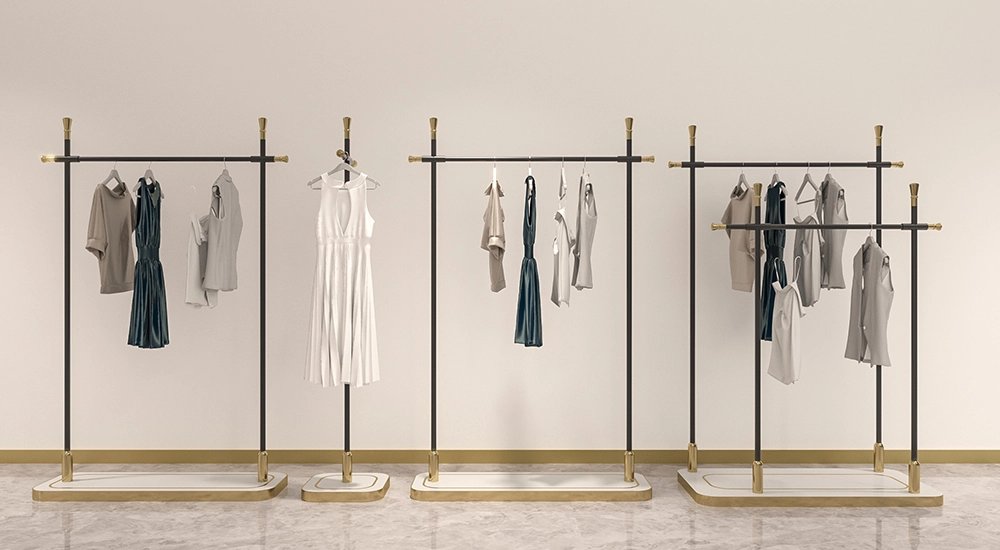
RYLOR
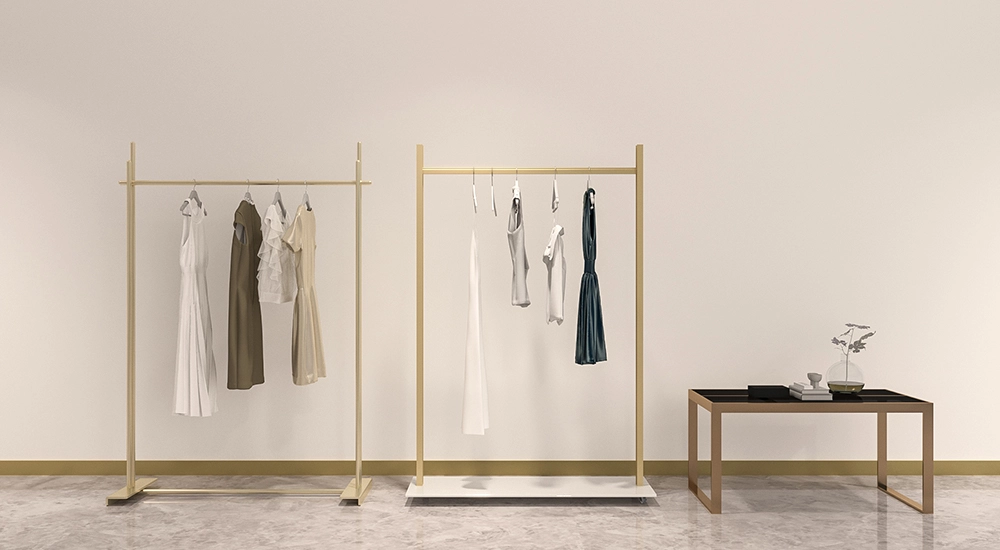
FLEEK
Elegant gold free-standing custom clothing display rack set with multi-function display table
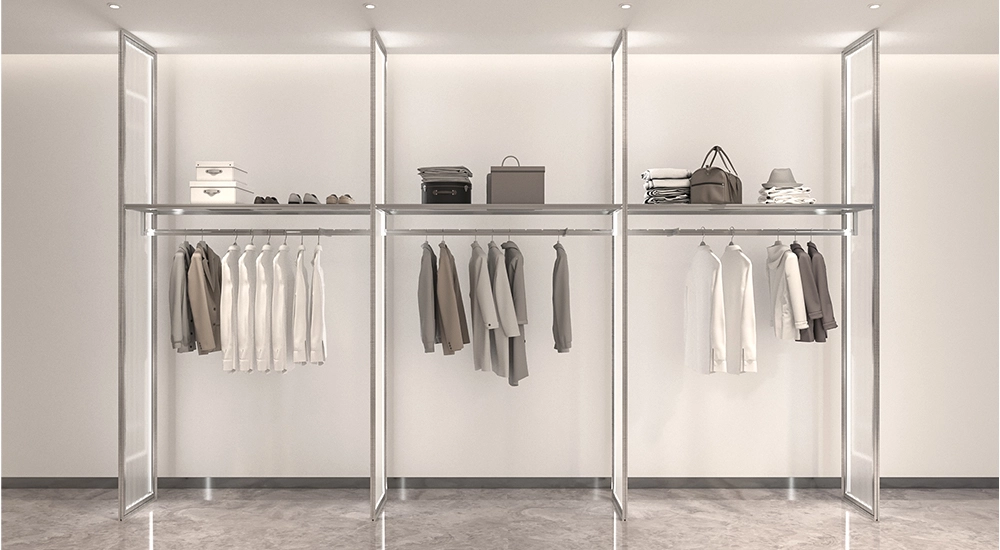
VISO
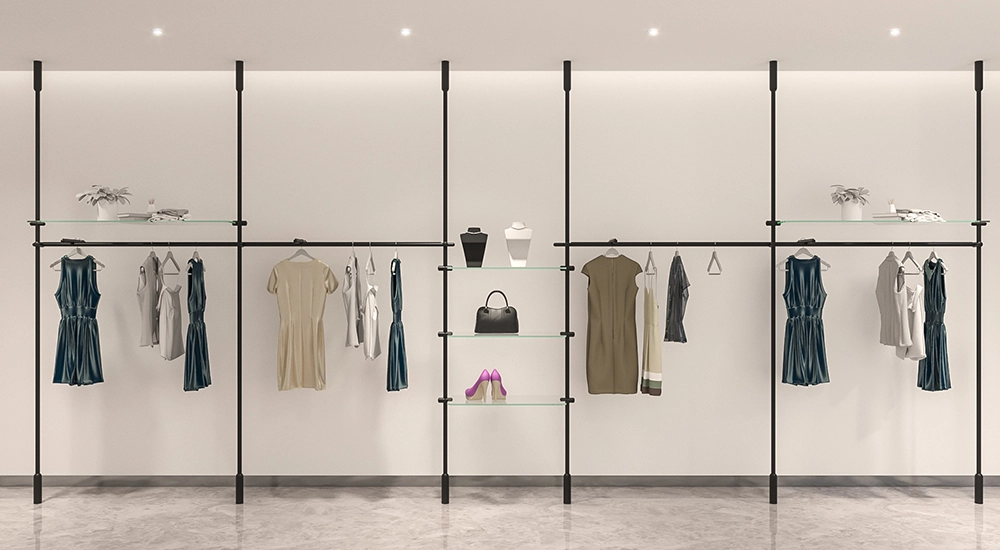
STAX
Copyright © 2024 RUMIS All Rights Reserved. Designed by Gooeyun

Facebook
LinkedIn
Instagram