

The Future of Retail Display Racks: Smart, Sustainable, and Modular Solutions
Quick Summary: The Future of Store Displays
Retail display racks are evolving from simple storage units into interactive, data-driven marketing tools designed to maximize sales per square foot. In the coming years, success will depend on integrating technology with flexible store layouts.
To stay ahead of the curve, retailers must focus on three primary pillars of modernization:
- Smart Integration: Adopting racks compatible with IoT sensors and Electronic Shelf Labels (ESL).
- Sustainability: Utilizing sustainable display materials like recycled aluminum and bio-based plastics.
- Modularity: Prioritizing merchandising display fixtures that allow for rapid layout changes.
What are the most effective retail display racks for modern merchandising?
The most effective retail display racks are specialized fixtures—specifically gondola shelving and slatwall systems—that balance high-density inventory storage with psychological sales triggers. These systems are designed to optimize retail store layout optimization by guiding customer traffic flows.
Modern merchandising relies on the "less is more" philosophy paired with high adaptability. Static, heavy fixtures are being replaced by lightweight, modular systems that allow retailers to reconfigure their floor plans in minutes to suit seasonal trends. Strategic placement of these racks is critical; it guides the customer journey, increases dwell time, and positions high-margin items at eye level.
Key Benefits of Optimized Racking:
- Increased Dwell Time: Well-placed racks encourage shoppers to browse longer.
- Higher Impulse Sales: Strategic point of purchase racks can boost checkout adds by up to 30%.
- Better Visibility: Open designs prevent the "warehouse" feel, making products pop.
Core Categories of Display Racks and Their Strategic Uses
Retail racks fall into four primary categories: Gondola, Slatwall, POP, and Specialty, each serving a distinct function in the customer journey. Understanding these distinct roles is vital for creating a cohesive store environment.
At Guangdong Meicheng Smart Building Co., Ltd (Brand: RUMIS), we have spent over 10 years manufacturing these specific solutions for fashion retail brands across 60+ countries. Our experience confirms that mixing these categories correctly is the secret to a high-converting floor plan.
1. Modular Gondola Shelving This is the workhorse of the retail world. Modular gondola shelving provides heavy-duty support for dense inventory items like groceries, hardware, or folded apparel. Its double-sided nature maximizes floor space usage.
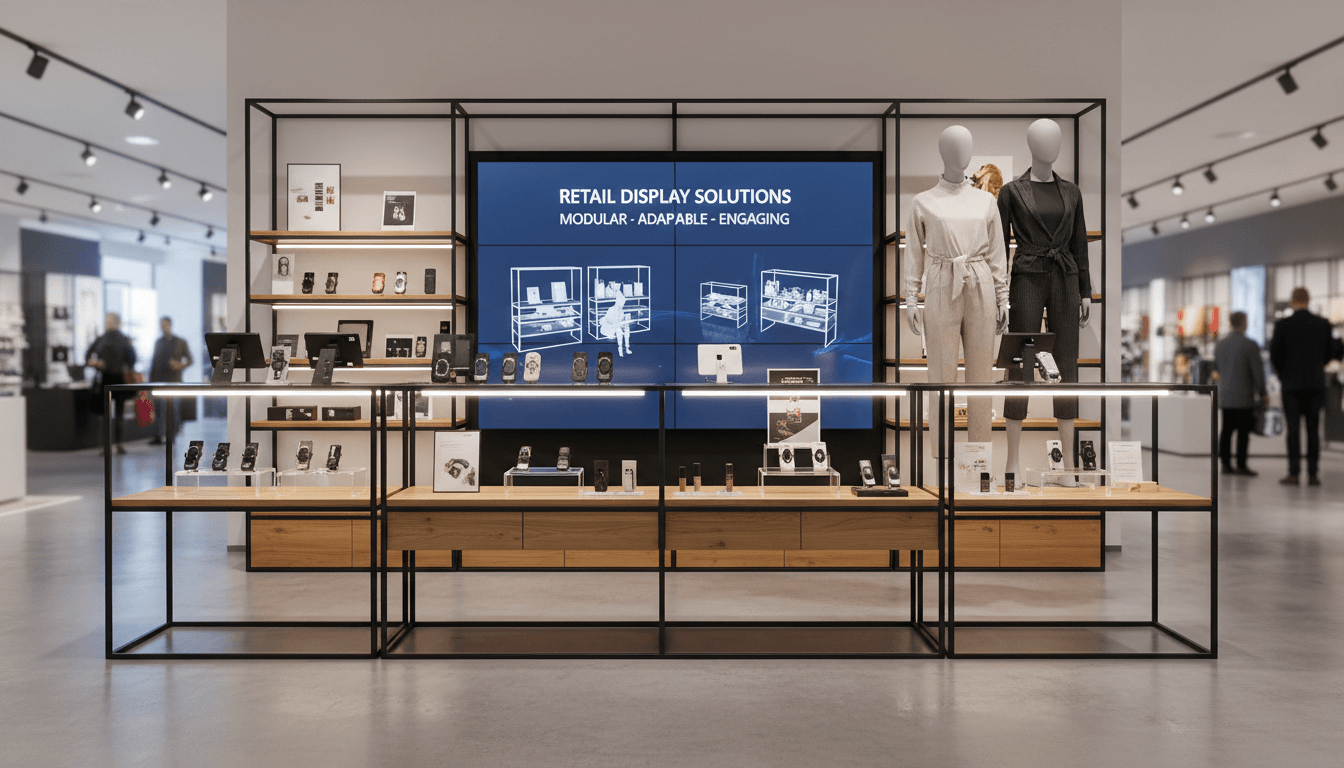
2. Slatwall & Gridwall Systems These are versatile, wall-mounted solutions ideal for vertical merchandising. They are particularly effective for hanging items like accessories, tools, or clothing, allowing for variable heights without moving heavy shelves.
3. Point of Purchase (POP) Displays Located at checkouts or high-traffic intersections, these high-visibility standalone units are the primary drivers of impulse purchases.
4. Specialty Custom Racks For unique items like eyewear, jewelry, or luxury fashion, off-the-shelf solutions often fail. Custom racks, like those we design at RUMIS, align with specific brand aesthetics and product dimensions.
2026 Trends: The Shift Toward Smart and Sustainable Fixtures
The dominant trends for 2026 are the convergence of eco-friendly materials and smart technology integration within physical fixtures. Retailers are moving away from disposable displays toward long-lasting, circular economy solutions.
Data indicates a massive shift in how physical stores operate. According to a 2024 report by One Door, poor visual merchandising execution costs retailers an estimated $125 billion in lost sales annually. To combat this, modern racks are becoming "intelligent."
Top Trends Shaping the Market:
- IoT & ESL Integration: Shelving is now being built to house Electronic Shelf Labels and weight sensors for real-time inventory tracking. The smart shelves market is projected to grow significantly, driven by a demand for automation.
- Sustainable Display Materials: Brands are demanding fixtures made from recycled powder-coated steel and biodegradable composites to meet ESG goals.
- Minimalist Aesthetics: "Invisible" fixtures that focus entirely on the product are trending. RUMIS specializes in these sleek, customized designs that enhance brand recognition without visual clutter.
- Interactive Elements: Displays that incorporate digital screens or tactile elements can boost product engagement by up to 40%, according to recent industry data.
Common Mistakes to Avoid in Rack Selection (Expert Tips)
The most common mistake retailers make is prioritizing rack aesthetics over functional load capacity and customer flow dynamics. This often leads to cluttered aisles and safety hazards.
Drawing from our global experience at RUMIS, we often see retailers compromise on quality to save upfront costs, only to face higher replacement costs later. A cheap rack that sags under the weight of winter coats damages brand perception instantly.
Avoid These Critical Errors:
- The "Butt-Brush" Effect: Overcrowding the sales floor with too many racks. If a customer is brushed from behind while browsing, they are likely to leave the aisle immediately.
- Ignoring Load Capacity: Using lightweight racks for heavy items. Always check the weight rating.
- Brand Mismatch: Using industrial metal racking for high-end luxury goods, or fragile glass for hardware stores.
- Neglecting ADA Compliance: Failing to ensure aisle widths and rack heights meet accessibility standards, alienating a portion of your customer base.
Implementation: Industry Leading Solutions for Global Retailers
Successful implementation requires partnering with manufacturers who offer end-to-end design, prototyping, and customization services. It is not enough to simply buy a rack; you must engineer a solution.
For over a decade, Guangdong Meicheng Smart Building Co., Ltd (RUMIS) has provided bespoke solutions for both small boutiques and large fashion retail chains. Whether you need display racks for fashion retail stores or specific display racks for clothing stores, working with a manufacturer that understands global markets (covering 60+ countries) ensures your fixtures are durable, on-brand, and scalable.
Steps for a Successful Rollout:
- Audit Your Floor Plan: Identify "hot spots" and "dead zones" using heat mapping data if available.
- Define Material Needs: Choose materials that align with your brand voice (e.g., wood for organic, metal for industrial).
- Prototype Custom Solutions: For key product lines, work with RUMIS to create a custom rack that fits the product perfectly.
- Test and Iterate: Implement the new layout in a pilot store before a global rollout.
FAQs
What are the best display racks for small retail shops?
Slatwalls and nested tables are the best options for small shops. They maximize vertical wall space and create flexible floor layouts that keep the store feeling open rather than cluttered.
How long do industrial retail display racks typically last?
High-quality powder-coated steel or treated wood racks typically last 10-15 years. With proper maintenance and avoidance of overloading, they are a long-term capital asset.
Are custom display racks worth the extra cost?
Yes, custom racks are proven to enhance brand recognition and perceived product value. Tailored solutions fit unique product dimensions that standard racks cannot, reducing wasted space and improving presentation.
Which material is best for heavy-duty retail shelving?
Powder-coated steel is the industry standard for heavy-duty shelving. It offers the best balance of weight-bearing capacity, durability against chipping, and cost-effectiveness.
How does rack height impact customer psychology?
Lower racks (waist to eye level) create a sense of openness and luxury, while high racks suggest volume and value. Luxury brands typically use lower displays to allow visibility across the entire store.
What is the difference between gondola and slatwall racks?
Gondolas are free-standing, double-sided units used for aisles, while slatwalls are wall-mounted panels with grooves. Gondolas create the layout; slatwalls utilize the perimeter.
How often should I rearrange my retail display racks?
Major floor reconfigurations should happen seasonally (every 3 months). However, high-traffic point of purchase racks should be refreshed or moved every 2-4 weeks to combat customer blindness.
Where can I find ADA-compliant retail display solutions?
Most reputable manufacturers, including RUMIS, offer "Universal Design" fixtures. These meet specific height and reach requirements to ensure accessibility for all shoppers.
References
Retail Fixtures Market Size, Share | 2026
Retail Fixtures Market Size, Forecast To 2035
Retail Shelving & Racks Market Growth 2033
Smart Shelves Market Size, Share & Growth Report, 2030
- Quick Summary: The Future of Store Displays
- What are the most effective retail display racks for modern merchandising?
- Core Categories of Display Racks and Their Strategic Uses
- 2026 Trends: The Shift Toward Smart and Sustainable Fixtures
- Common Mistakes to Avoid in Rack Selection (Expert Tips)
- Implementation: Industry Leading Solutions for Global Retailers
- FAQs
- What are the best display racks for small retail shops?
- How long do industrial retail display racks typically last?
- Are custom display racks worth the extra cost?
- Which material is best for heavy-duty retail shelving?
- How does rack height impact customer psychology?
- What is the difference between gondola and slatwall racks?
- How often should I rearrange my retail display racks?
- Where can I find ADA-compliant retail display solutions?
- References
Recommended for you
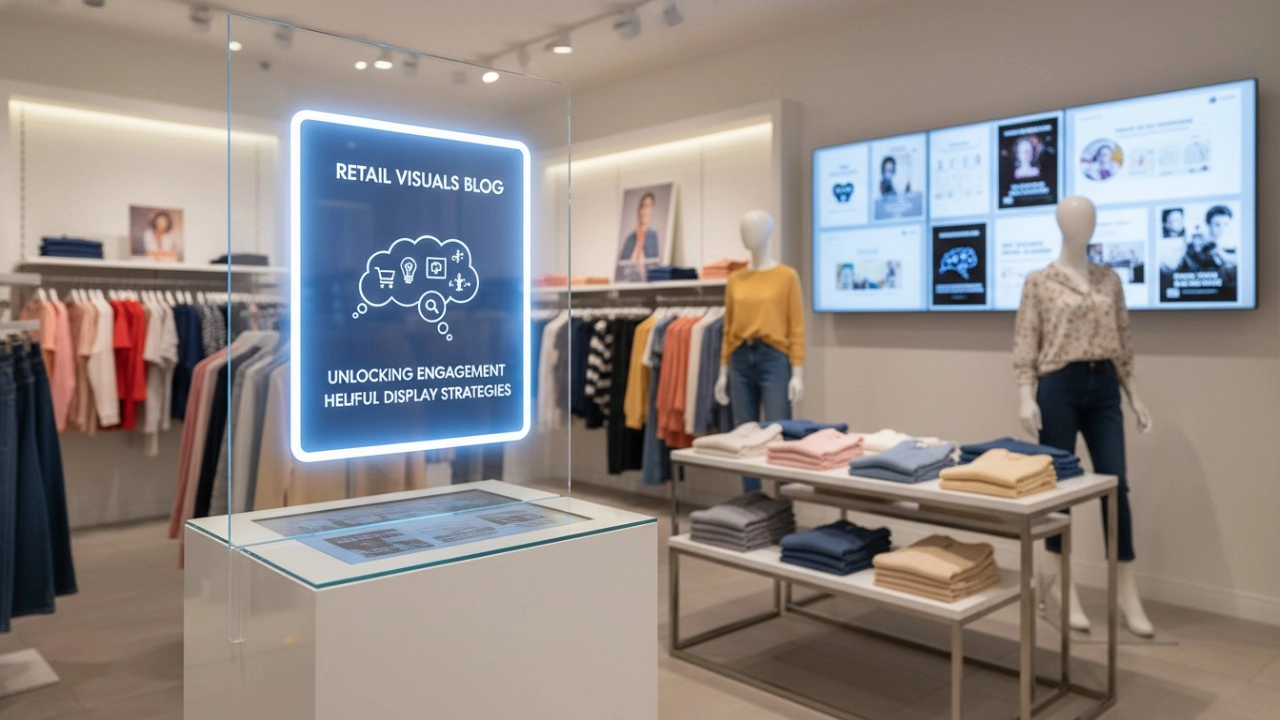
Why Your Display in Retail is Failing: 7 Critical Errors and How to Fix Them Now
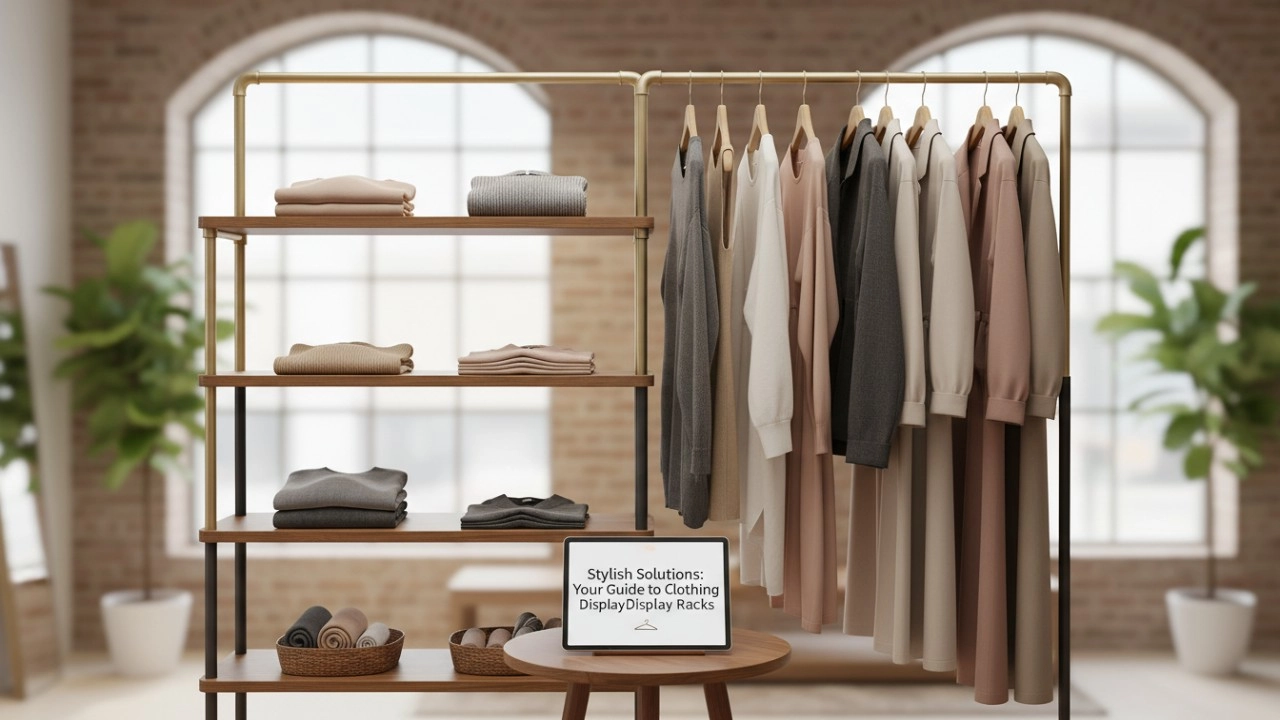
How to Choose a Clothing Display Rack That Boosts Your Sales by 30% (2026 Guide)
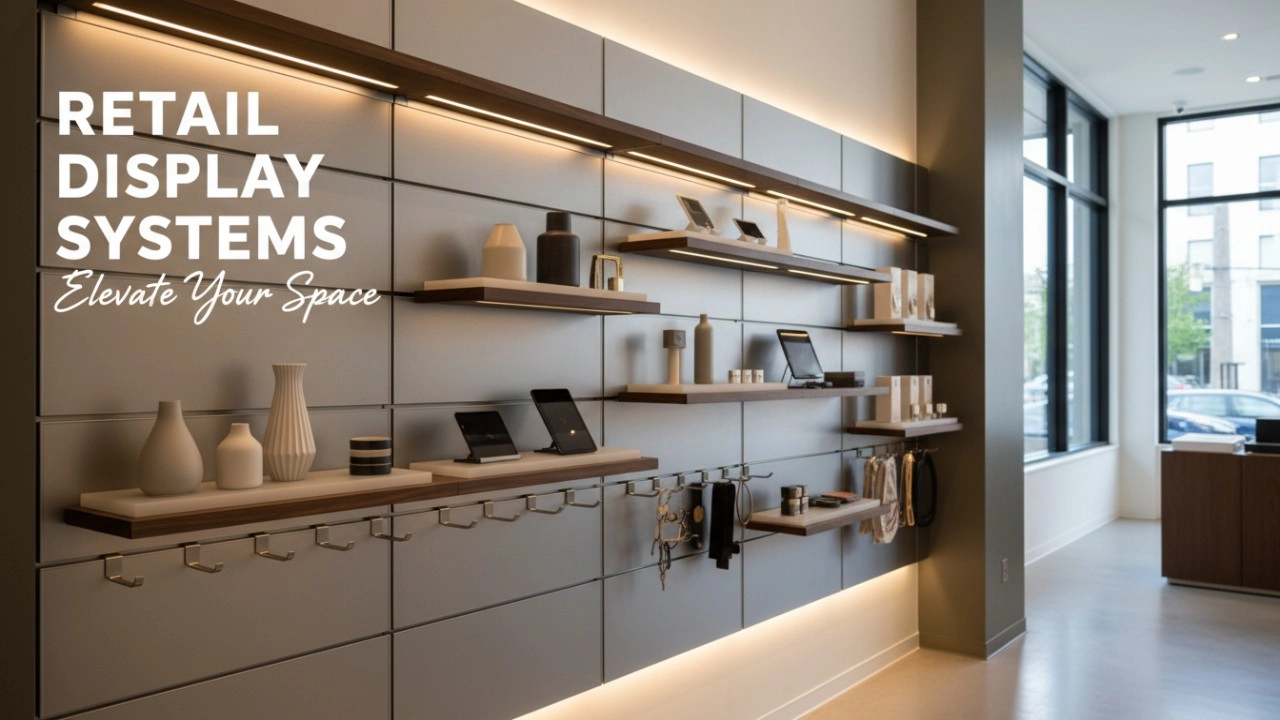
Retail Display Wall Systems 2026: Smart Modular Walls That Maximize Store Profitability
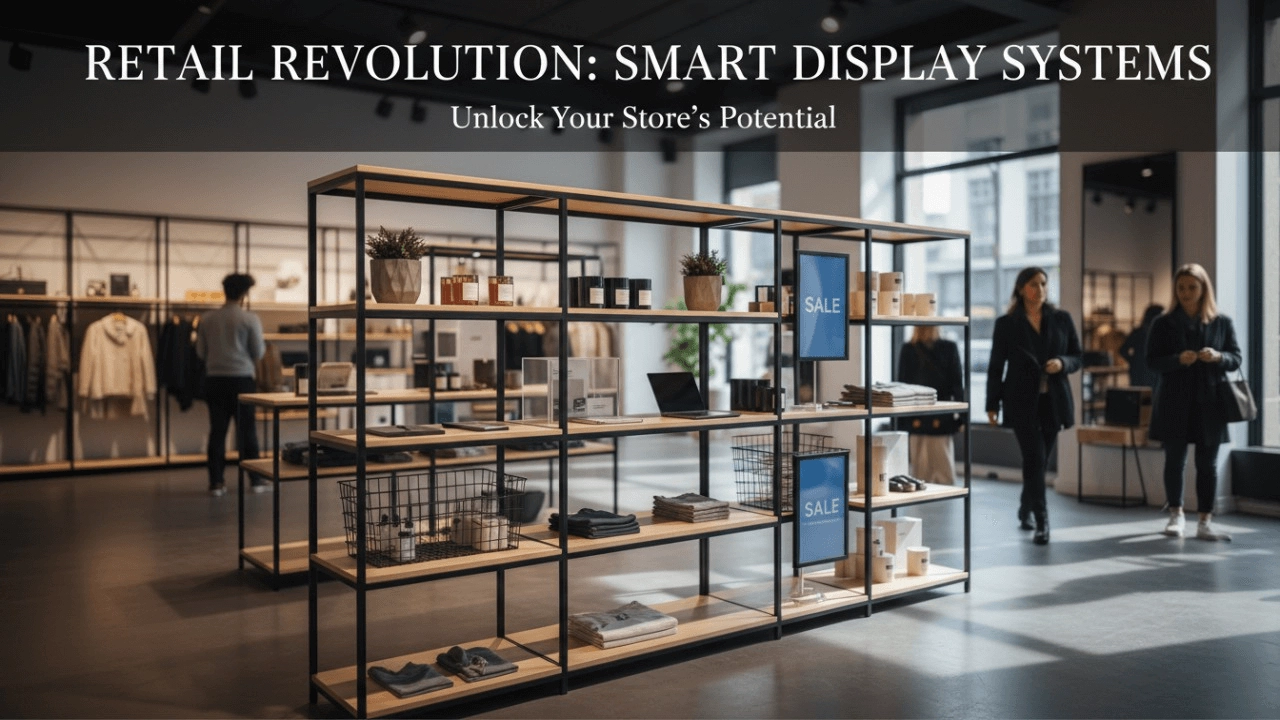
The Strategic Aspects That Define an Effective Retail Display System
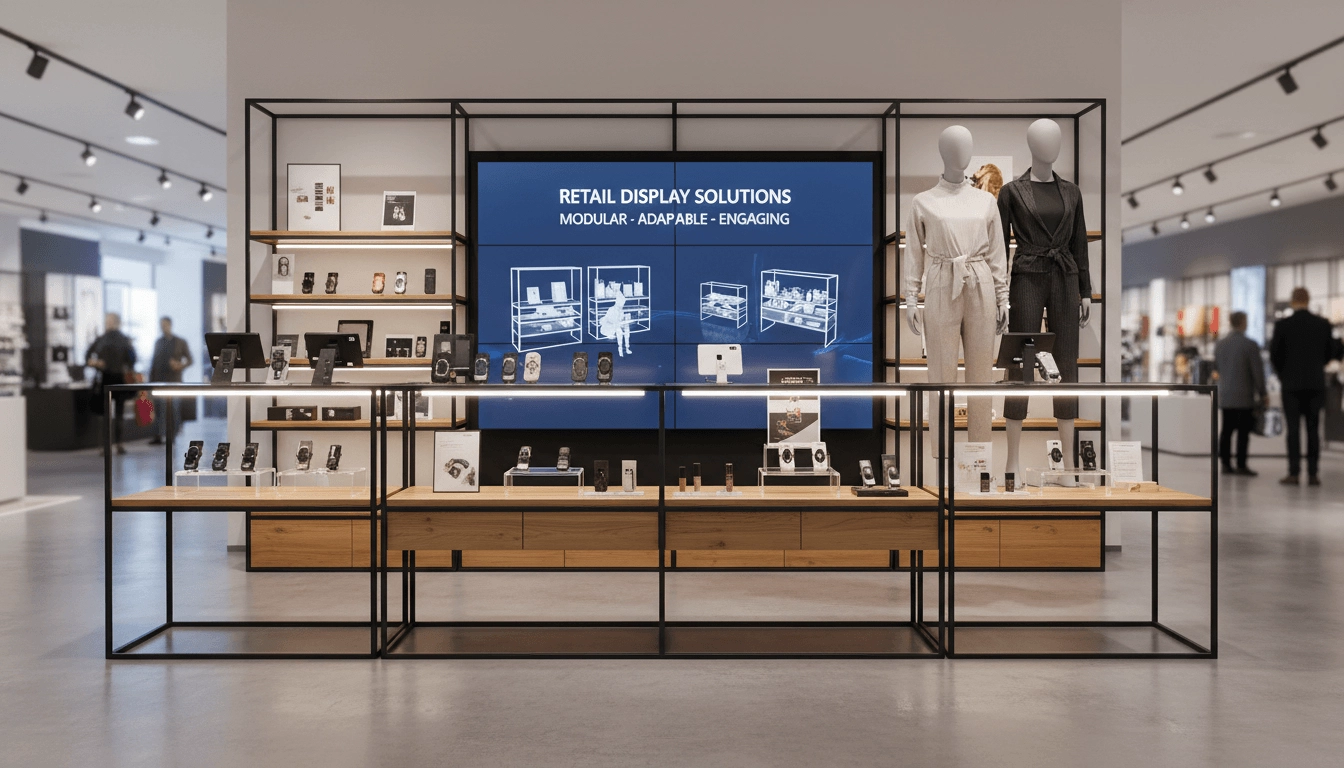
Retail Display Systems for Fashion Brands: Design, Innovation & Custom Solutions
FAQ
Do you provide shipping and delivery services for a frame display stands?
Yes, we offer reliable shipping and delivery services for fashion clothing rack displays, working with trusted logistics partners to guarantee prompt delivery.
Do you provide customized garment display rack for clothes ervices?
Yes, we provide customized garment display racks for clothes services where we can tailor product designs, dimensions, and colors according to your requirements.
How can I place an order for your display racks?
You can reach us by phone, email, or through the contact form on our website. After receiving your display racks order request, we will communicate all the details with you and provide you with a quotation.
Can your display racks be reconfigured after installation?
Absolutely. Our display racks are designed for flexibility and can be easily reconfigured to adapt to new layouts and displays.
Are your retail clothes display racks available in stock or made to order?
Our retail clothing store displays are available in standard inventory, with many products made to order for custom requirements.
You may also like
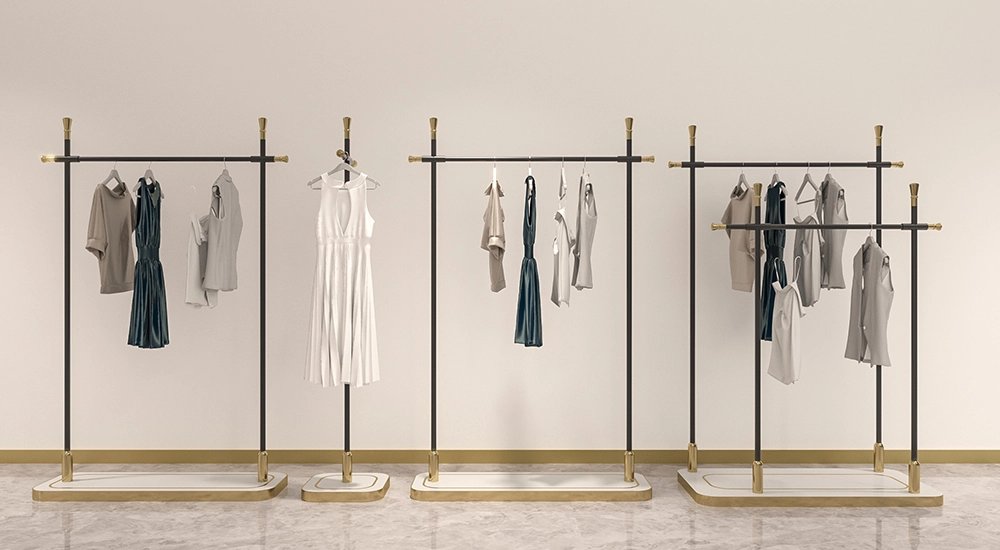
RYLOR
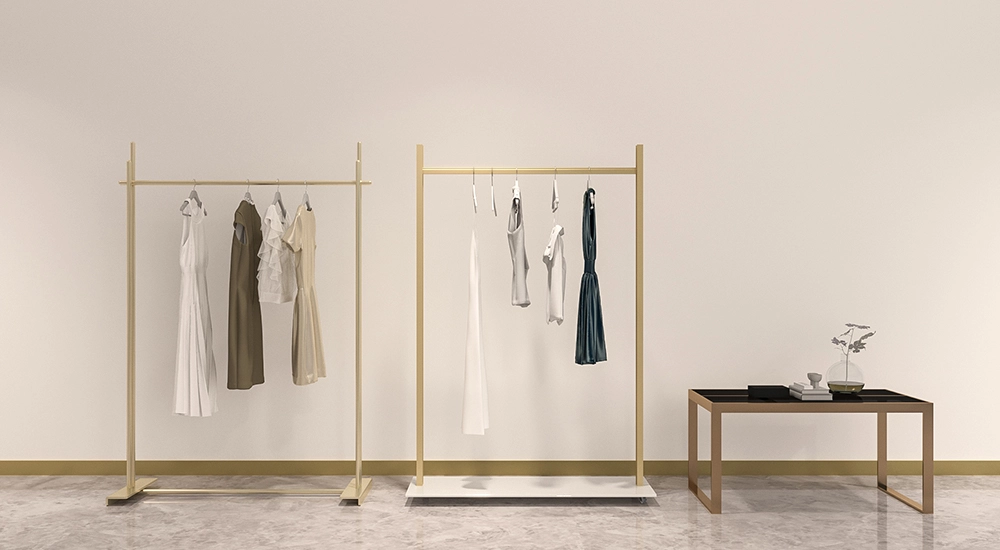
FLEEK
Elegant gold free-standing custom clothing display rack set with multi-function display table
VISO
STAX
Start your journey with us
Are you ready to improve your store operations with our display systems?
Get started today.
Copyright © 2024 RUMIS All Rights Reserved. Designed by Gooeyun

Facebook
LinkedIn
Instagram